Live Archives - Page 5 of 13 - Itch.world
A three-minute escape to Italy.
Tuscany, travel, medieval village, Italy, festivals, celebrations, customs, cooking, recipes, living in Italy, moving to Italy, visiting, visit, restaurants, language
39
archive,paged,category,category-live,category-39,paged-5,category-paged-5,wp-theme-stockholm,ajax_fade,page_not_loaded,,select-theme-ver-4.4.1,paspartu_enabled,wpb-js-composer js-comp-ver-7.9,vc_responsive

Live to be 100

The Beast From The East II weather front just roared through bringing some real cold to the valley — on a couple of nights temperatures were down to -7°C (19°F). John was up early one morning and noticed one of our elderly neighbors walking up the hill to town, despite the ice and strong wind. John mentioned it to me and said that he was surprised to see him out, braving the cold, but I wasn’t puzzled. A more important need was calling, something that weather and a pandemic can’t suppress — coffee with friends.

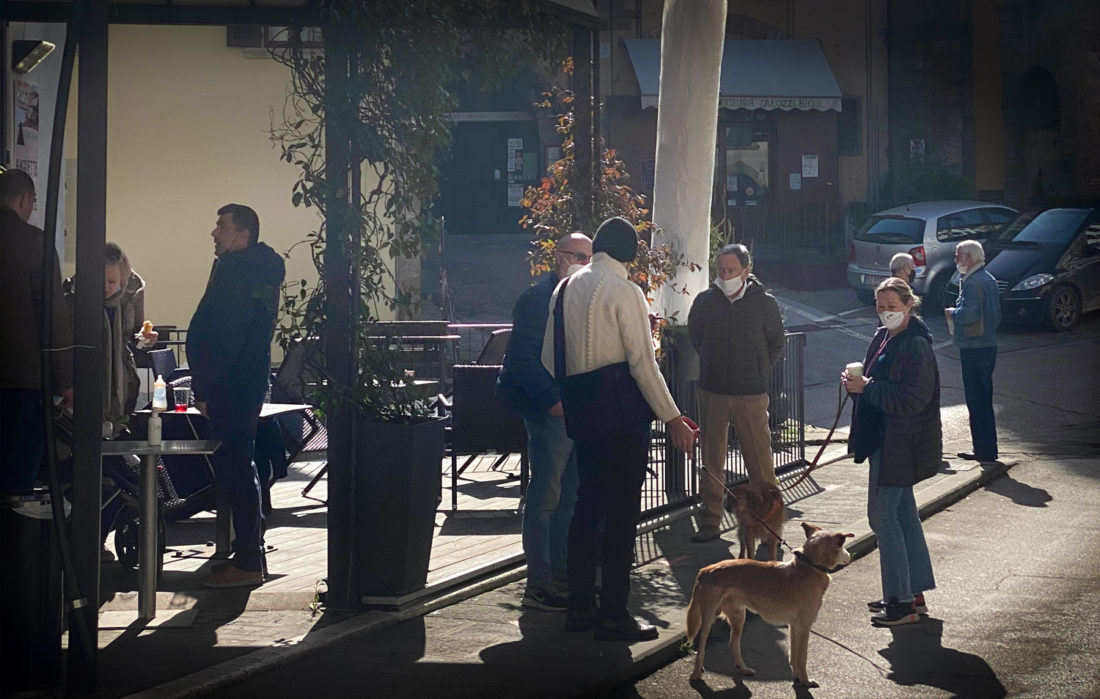
Groups gather throughout the day at the cafes. Current restrictions dictate that cafes are only open for takeout so people stand outside, holding tiny paper cups with a shot of espresso, and try to drink while pulling aside their masks the minimal amount possible. But mainly they talk and laugh, exchanging gossip, news, and complaints. When my favorite cafe is allowed to serve inside a group of older men gather in a back room to smoke, play cards, and bet. It’s a room stained dark with smoke, but also mystery and intrigue. I hesitate to enter it even when they aren’t present as it feels like I am trespassing.

Teens hang less at the cafes and more in the pedestrian tunnel that runs through the foundations of the tower on the wall, complete with the town’s ancient water well. They are often smoking, mostly tobacco but sometimes pot, and seem unable to keep their tough teen personas intact faced with a “buon giorno”, answering with a smile. If I squint I can easily see them in sixty years, still together.

If not outside a cafe, the old men gather under the portico near the ATM. This spot is most crowded on market day, every Wednesday morning, and on Sunday morning when they get kicked out of the house so that Sunday lunch can be prepared. Most have known each other since school days and still have much to say to each other.

To socialize this much you have to get to where the gang is. Our neighbor is not alone in his frequent walking trips to the village, which although only a couple of hundred meters, is breath-catchingly steep. Our house is between town and the cemetery so we see the steady parade of older people going down the hill and back up for their daily visits to the graves. The elderly who live in the historic center navigate cobblestones, tiny staircases in the houses, and steep streets. They walk to stores and the pharmacy; most of their needs are met within meters. I marvel at their mobility after growing up in the states where there seems to be a universal acceptance that after a certain age one needs to move to, as Mom’s retirement community euphemistically called it, a “level-in”.

After being here nearly ten years I credit these two things, the insatiable desire to socialize and frequent walking that requires stamina and balance, with the vitality and spark that I see in the older people. Not to mention that only Japan’s population lives longer. I aspire to age like this and will try to follow their graceful lead.

0
0
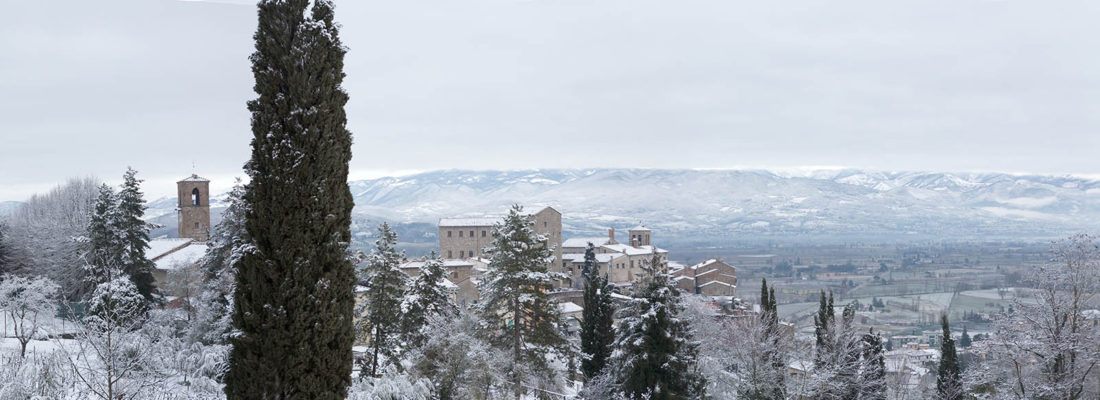
Anghiari in snow

Would you just look at that

Almost ten years ago, when we moved here, I wondered if my sense of being gobsmacked by beauty several times a day would last or if I would just grow used to it. If anything, it has grown stronger.

I’ve been surprised that our appreciation is matched or even bested by the Italians bred, born, and raised surrounded by such beauty. I’m in a couple members-only Facebook groups for the village where the main topic of conversation is how beautiful it all is, accompanied by lovingly taken photos. These will be followed by a few dozen comments laden with beating heart gifs and responses like “Spettacolo!”. The mayor often chimes in. (The community gets most of its news from the mayor’s personal Facebook posts — you have to be friends — usually leading with a Covid update for the town, and followed by cheery reports about a new sidewalk going in or improvements to the basketball court. He’s the first non-Communist mayor since The War so he has a lot of suspicion to overcome.)

This love of place all came to an exciting head over the last few weeks when the village found itself in a social media competition for the Most Beautiful Village in Tuscany. We are far off the tourist map, unlike places like Cortona, Montepulciano, or San Gimignano which, in the humble opinion of the village, have ceased to exist in any meaningful way except as tourist destinations. Despite our lack of fame we somehow ended up in the semi-finals against Volterra, a shocking turn of events. All stops were pulled out as pleas went out to everyone in the village to flood the competition with their favorite village photos. We won that round and were in the final competition against Massa Marittima. They have just a few things to their advantage — a cathedral, prehistoric artifacts, a castle from the 9th century, a church founded by St. Francis himself, and a vantage point on the Mediterranean, but the villagers fought a strong social media war of images and vote coercion of friends and family and WE WON!! It even made the national papers. Now we can get back to the real work at hand deciding with the mayor how high the basketball hoop should be on the newly repaved courts.

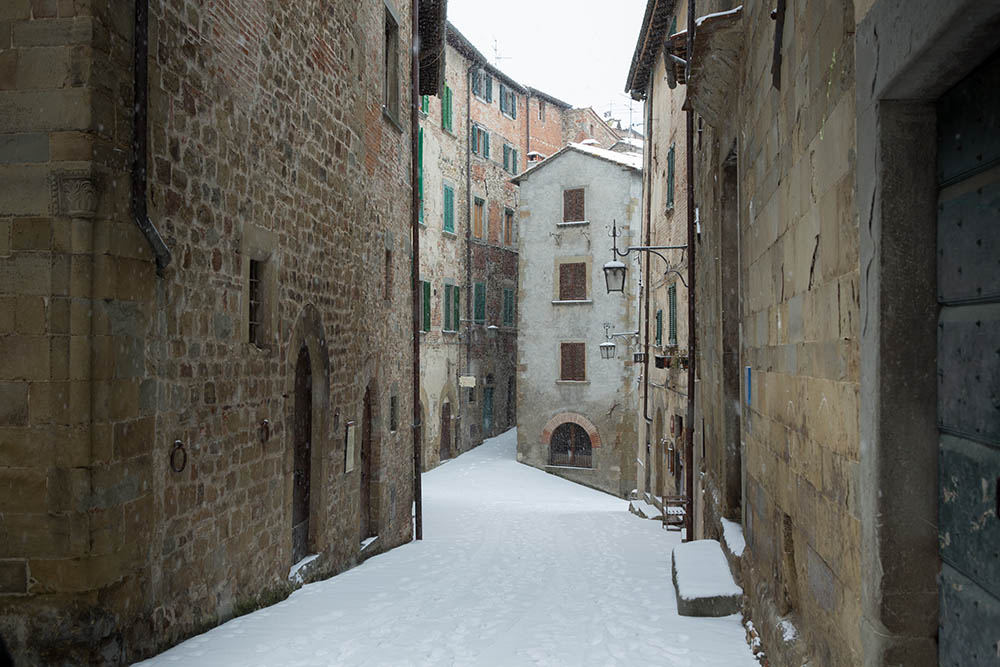
Not that there aren’t the fair share of box stores and car lots around here, but it matters that we live in the shadow of a thousand-year-old village in a beautiful valley. Untouched nature is breathtaking but there’s something about the long interplay between people and the land that floats my soul. That the village is constructed of stones that were sitting right here so that the color is perfectly matched to the surroundings. The tiny cobblestone streets worn down in the middle by centuries of foot traffic. The patterns that the plows make in the rolling fields. This all matters deeply to me. 

There’s also beauty in sound. I love falling asleep to the noises of owls, foxes, deer, and wolves, and waking up to the sound of roosters and church bells. I know many would fight me on the last two but I am adamant that roosters and church bells are lovely sounds at just the right distance — so they don’t wake you up but you can appreciate them when you are awake.

It’s not just me. John, of course being the epically visual guy he is, is constantly touched. But it does surprise me a little that the kids notice and comment so frequently. Those moments when we’d be driving an angsty teen to high school and they’d point out the window and say “would you just look at that.” I was driving Sebastian to the airport to return to school in the UK last September and I stopped the car so that an old man could cross the street, pushing his bicycle. After he crossed in front of the car he stood in front of an old stone building in his oversized puffer jacket, gave us a huge smile and a wave, and then pushed off on his ancient, bright pink bicycle. Sebastian’s comment, “That was beautiful.”

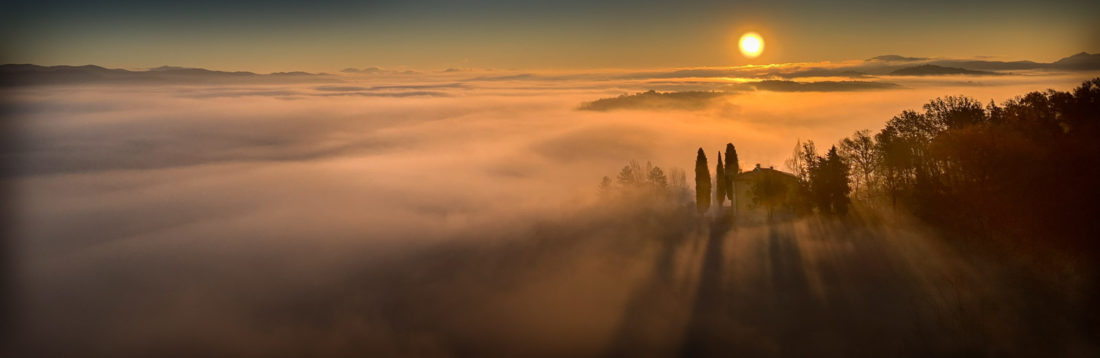
In this odd moment we find ourselves in let’s never forget how important it is to appreciate the beauty around us, be it the steam from a cup of coffee, fog over a valley, or a smile from a stranger on a bicycle.

1
0

What’s getting me through

Between the virus, the dark, and the cold, life’s palette is smaller. Nothing big and dramatic about Itch today, but I did want to talk about several things that are keeping me going, a couple today and more next week.

— Walks. I really, seriously, need to take a walk every day. Fortunately, even with our ever-shifting kaleidoscope of lockdown colors (are we red, orange, or yellow today? — sometimes it’s all three in one week as the government rides the throttle), getting out of the house to walk the dog is consistently authorized. Lola and I usually walk a trail in the valley which used to be a railway line. Somehow this same route doesn’t bore me as I can watch the shifting of seasons, weather, and crops. I often see the same set of locals and their dogs. The Czech Wolf Dogs (a breed that is half wolf and half German Shepherd and popular among 20-something men) need to be avoided, but the other dogs are friendly to Lola, including the Pitbull we met yesterday. My biggest challenge on the walk is to keep Lola from rolling in seemingly irresistible wild boar shit, which is singular in its smell and stickiness in adhering to the coat of the dog. Yesterday I was not successful. After four shampoos Lola is mostly clean.

In the fall, until the first freeze, I often see solitary old men on bicycles who head to a patch of dense woods. They look furtive and avoid conversation and eye contact on the way into the thicket in a manner that alarmed me before I realized what they were up to. After they emerge from their secret foraging spots with baskets of porcini they are very talkative and want to show me what they’ve found.

Looming in the mountains in the distance is the unmistakable peak of La Verna, one of the monasteries founded by St. Francis and where, legend has it, he received the stigmata. It’s also the spot where I very illegally spread a tiny bit of my mother’s ashes, not because she was Catholic, or would have appreciated the sardonic fascination I have with the place, but because it does feel like an otherworldly and holy place. And it’s nice to give her a nod and greeting on the walk.

Occasionally I am joined on the walk by unexpected company. I started talking to a flock of sheep in a far field and the conversation went in a very unexpected direction.

I’d rather not have an intimate conversation with a wolf, who at any moment could be a special type of unexpected company on the trail — their tracks are everywhere. I often wonder if they are watching me while I walk. I think because I grew up in a suburban wasteland in Florida the fact that we coexist with wolves in close proximity thrills me and makes me deeply happy. The locals mostly agree. Friends who have had a couple of their goats killed still support having a healthy population of wolves. A couple of days ago a local man posted to the village Facebook page a photo he’d taken of a male and female wolf crossing the main road into the village at 9:20 in the morning and running into a field. The comments were filled with humor and delight.

— Anticipation. In the fall we planted 400 tulip bulbs. I think about them a lot during the freezing winter nights and cannot wait for them to visit us the Spring.

Our friends and former neighbors in Berkeley have decided to become our neighbors again, this time only part-time, and are purchasing the house at the end of our driveway. In addition to looking forward to a time in the future when the house will be alive with friends and family, I am excited about being involved in another renovation project. It is a joy to make an inhabitable, unloved house into something magical, and to reunite the two properties, which were legally separated only a few years ago, in spirit.

I discovered an odd thing when we restored our house. When working with a structure that is several hundred years old, and land that has been worked for thousands of years, it’s clear that the current moment is just a small fraction of its history. I would have assumed that makes whatever we do to the house seem less important, but somehow the opposite is true, because it is not just about the choices pleasing us today but there also is some sort of obligation to the future. I start thinking of alterations as changes that will ripple into the next several hundred years and leave a faint whiff of the choices, pleasures, values, and tastes of us. Just as the several layers of exposed paint I am looking at in the room where I am now bring me closer to the occupants of this same space who redecorated these walls in the 1700s and 1800s. And upstairs we can look into the frame of a former window, which is now incorporated into an interior wall. Back before our house was renovated into a villa in the 1700s it was a tower and the window was on the exterior and afforded a beautiful vantage point over the valley all through the middle ages. It’s easy to think of the person who originally created the window, and of the person hundreds of years later, and hundreds of years ago, who decided to seal it up to create another room on the other side.

Being in this flow of history seems to be especially helpful right now as it’s guaranteed that this all shall pass.

0
0

New Traditions

It has been a long time since I have been stoned. So long that I can’t even quite remember the last time, but it was before marriage, before kids. So, when one of my children suggested that we all get high as a family over the holidays, it seemed a fitting thing to do at the end of 2020.

First there was the task of actually acquiring the stuff. I gently remind my readers that we are not in a U.S. state where this activity is easy and legal. We live in the equivalent of Cincinnati circa 1963. And there is a pandemic with restrictive movement orders, in case your forgot.

My child, through friends and contacts, located Sketch (his alias has been changed to protect his real alias) and we arranged a bus stop rendezvous a couple of miles from where we live. The offspring and I took off into the dark, with many warnings from my husband about the likelihood of a routine stop by the police to find out why we were on the road during the “orange” zone limitations. (I have somehow acquired a “reckless” label recently from John, which may have something to do with my Chamonix adventure. But who doesn’t occasionally need to be rescued by a helicopter?)

We devised a cover story that we were merely picking up pizza at a restaurant near where our connection would be waiting. I insisted that we actually did order a pizza so that our alibi would be airtight. This was much to the shock of the restaurant which was clearly having a slow night and had probably made one other pizza to go that evening.

We pulled up in the bus zone and there was Sketch, wearing a black hoodie pulled all the way up. To the relief of my progeny, as there was not one other person awake in a 2-mile radius, no secret handshakes were needed. These had been practiced, along with a carefully (and apparently mandatory) averted gaze.

We got the goods, and the pizza, and headed back to the house. On the way we stopped at a large and well-stocked tobacco vending machine to buy rolling papers and filters. We thought we had it all set.

Then came the hard part. I’m so out of touch between being such a mom and living eight years in Italy, which is behind the times in these matters, that I’ve missed out on a few basic life skills. It turns out that rolling a joint is a lot harder than it looks in the movies, or when some unimpressive yahoo hands you one. They have air gaps, come apart, and the filter is always in the way. I worked on doing dishes while one of my descendents turned to YouTube for answers. There is a vast library of information filmed by experienced 14-year olds in their bedrooms, but none seemed to solve our problem. We were over an hour into this and had not yet successfully inhaled anything.

We then went to Plan B. The apple bong. Very popular on YouTube. This involved using advanced tools to tunnel a set of intersecting channels into a regular old apple. This actually got us somewhere although we did end up almost singeing off some facial hair trying to light the tiny bud balanced atop the apple.

After all this a mild effect was felt and it was time to watch Blades of Glory. I remembered that I really hate smoking anything and rarely need to feel more tired, but it was all very pleasant.

We wish you a merry end to 2020 and a much, much better 2021, hopefully filled with some unexpected adventures.

(And thanks to Anna-Sophie for the glorious sunrise photo from her window, which happens to overlook our house.)

1
0

Today’s turkey

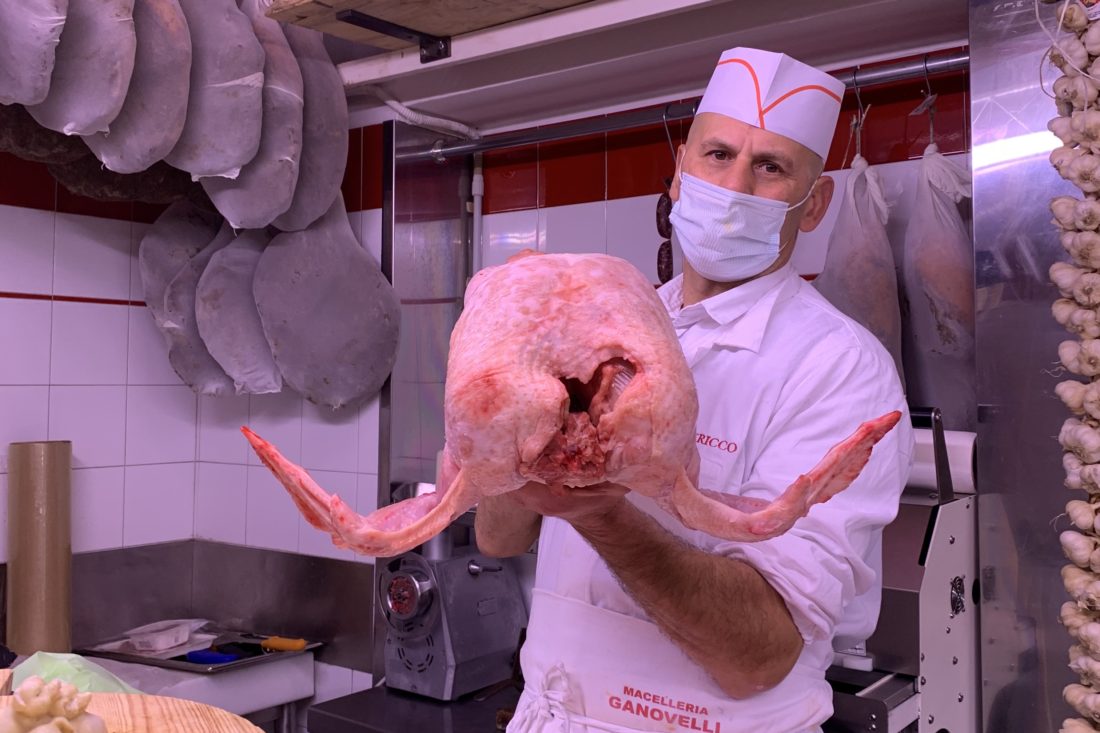
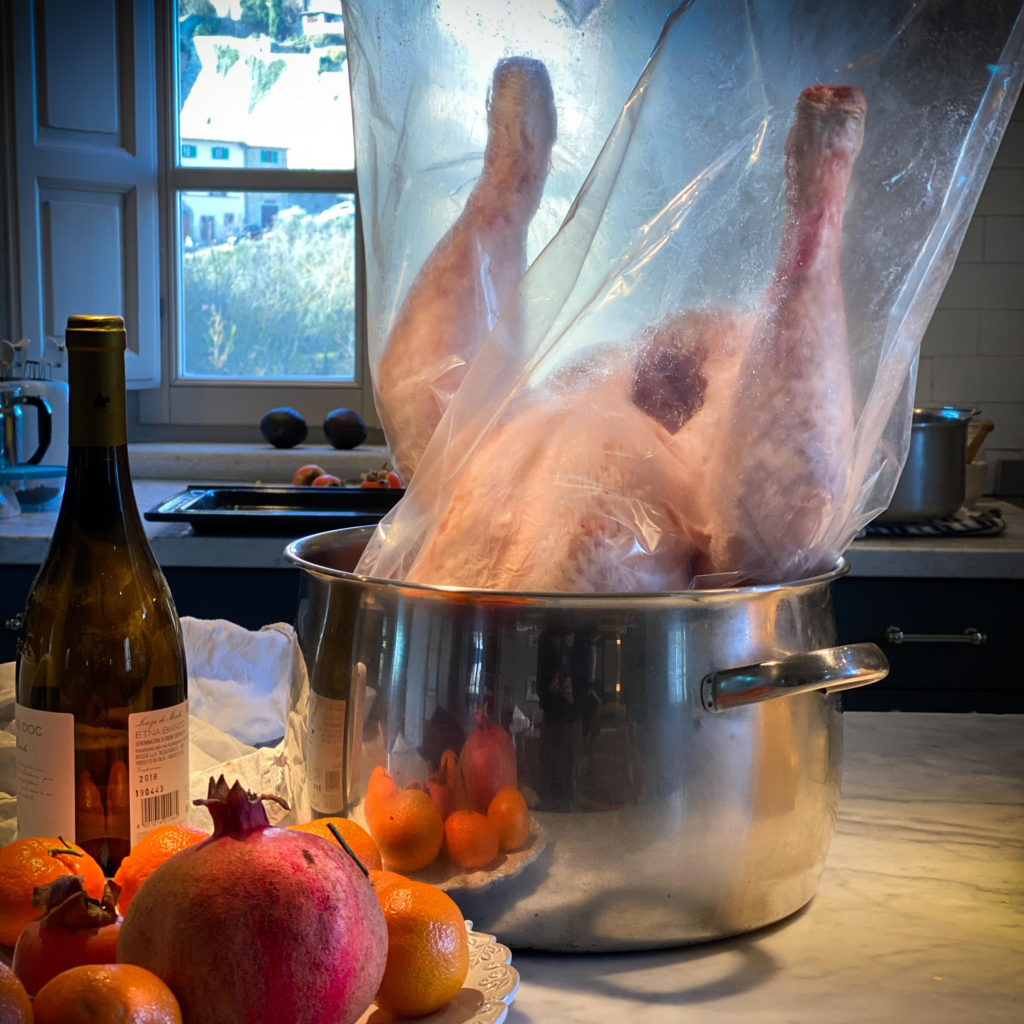
I’ve been having fond memories of how our village came together to help us celebrate our first Thanksgiving in town in 2012 when we were living in the small apartment in the convent. We may be in a different house now, in a pandemic, and not celebrating with family and friends, but some things remain the same. I went to the butcher today to pick up the bird I’d ordered for the two of us—”the smallest turkey at the farm, please”—to find this behemoth waiting for me. (At least the butcher refrained from asking me any personal questions. He recently asked a group of women customers, all 80 and up, “How’s sex, ladies?” They were delighted to be asked. More moments with the butcher here.)

I carried my bird through town, legs sticking out from the large plastic bag the butcher had wedged it into, to the wonder and amusement of most onlookers. It was market day and I went to my favorite cheese stand where they were fascinated by this little-known, foreign tradition—there are very few Americans in town. “How long to cook it? What is this “stuffing” thing you do? Do you really eat squash for dessert? How do you say ringraziamento again in English? Leave it here with us while you get a coffee—it is too heavy for you.”

Now for the brining.

1
0

A chill in the air

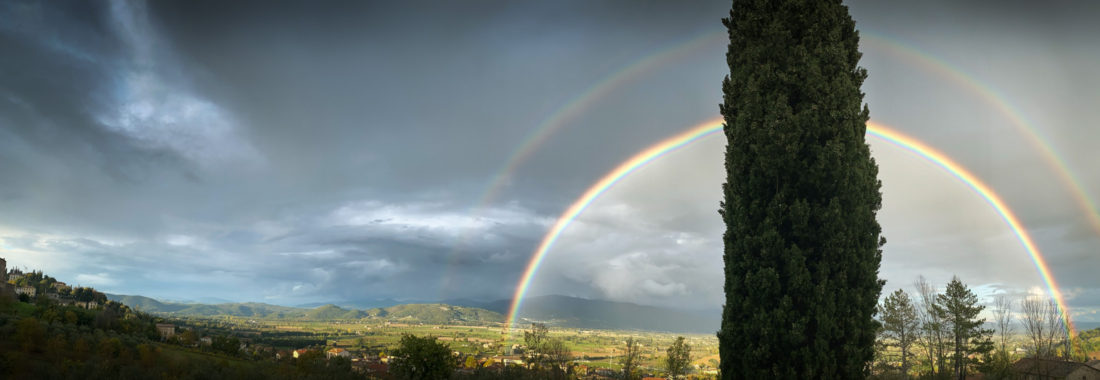
When I was heading out for my walk today I spotted this amazing rainbow and John was able to get this photo out our bedroom window. It reminded me of what my mother used to say when I was really little and we spotted a rainbow. “That’s God’s promise that he won’t kill all of us again by using water. It will probably be fire next time and we will all be burned.” Why she thought that this would be a good thing to tell a small child would fill a book, which I do not intend to write, but my mother did have a gift for worrying. It’s a good thing that a pandemic, divinely sent or not, never crossed her mind.

The days are getting shorter, as are our leashes. Life had pretty much returned to normal in Italy over the summer, albeit with the new accessories of masks and hand sanitizer. Outdoor spaces and nice weather were abundant so it was easy to eat out, catch a drink with friends, or have a morning coffee pretty safely. Stores have been open and operating normally for months, although it is required to be masked and sanitize before entering. But it was kinda easy to let worry subside, fill up on socializing, sunshine, and freedom of movement, storing away those experiences like bits of gold for the soul. And when cases were averaging a couple of hundred a day, out of a nation of 60 million, this felt appropriate. I felt so very lucky when friends and family in other parts of the world have remained in virtual lockdown since spring.

Things have changed. As temperatures have started to drop cases are surging again. There is a new worry and seriousness on people’s faces. Even though everyone has been 100% masked in the grocery store throughout the summer there was a lightness and normalcy that’s fading fast. Fewer people are stopping to chat, the contents of carts are getting bigger, and eyes above the masks look concerned.

The slide back to a lockdown is happening quickly. The first sign I had that things were getting serious was when the Italian government announced a couple of weeks ago a warning that Sunday lunches were of grave concern. This may seem like an odd government warning to people outside of Italy but here Sunday lunch, culturally more than Friday night drinks or Saturday evenings out, is the main event of the week. Families gather en masse with everyone in attendance from babies and toddlers to recalcitrant teens to young families through to the very elderly with much conversation and hugging. Although a lot of lunches occur in homes it is almost impossible to book a restaurant Sunday at lunchtime. If you are lucky enough to get a place you often find you are sandwiched between long tables with dozens of people, all related. There’s a loud din as people from one end of the table are trying to catch up with others across six or seven people in the middle. Kids are underfoot everywhere. And it is a wonderful thing to behold. And a petri dish in action. If I happen to be driving on a Sunday around 1:30 the roads are empty. Stores are deserted. It’s like Superbowl Sunday. This tradition is starting slipping a bit — several families of Donella and Sebastian’s friends don’t do the formal Sunday lunch anymore — but Sunday lunch is still ubiquitous enough to merit a nationwide government warning aimed at the very heart of Italian culture.

This primal need to be social extends to schools. Keeping schools open is of the highest priority for the government, partially due to the impact on the economy, but also because it’s felt that socialization is one of the primary benefits of school. There’s a phrase in Italian i bambini devono stare con i bambini, children should be with children, as that’s the only way they will learn the rules of getting along in society. As of right now most schools in Italy have students back in the classroom. There was an interesting article in the New York Times, written by an American pediatrician/parent living in Italy. The article quotes an American, Mary Barbera, living in Florence with a 7-year old daughter attending a local school. She describes the elaborate safety procedures and parental co-responsibility pacts that are in place. “Personally, I think Italians have a better inherent sense of common good and taking care of each other. They understand that in order for people to be well, everyone has to follow the rules.” And from what I’ve seen locally, which is reflected in the article, there is a willingness to trust the system and other parents, and take some risks, in order for the kids to have this important socialization that was missing when academics were online.

But it is fairly inevitable that with cases surging in numbers similar to the spring that we, no matter how much we are social creatures, are headed into a dark period of more isolation as winter sets in. Some things are definitely an improvement from the spring, downloads of the trace and track app Immuni have been impressive. The app monitors via Bluetooth everyone you are around, how close you are, and for how long. If you are positive you self-report to the app which notifies the people who have been in your vicinity and might have been exposed, all anonymously, so that tests can be administered. Testing in Italy is free or low cost and widely available. When a traveler arrives at a major airport or train station there’s a tent where you can get a free, rapid result COVID test. Rome’s Fiumicino Airport was the only airport in the world to be given 5 stars by SkyTrax COVID-19 Airport Rating. Despite all of these impressive things the testing numbers are looking bad — 11,700 new cases today which is similar to the worst of the spring, although thankfully, hospitalizations and mortality are still lagging the earlier wave.

When I went for my walk my Italian neighbors clearly weren’t thinking of this beautiful rainbow as a sign that the next time God was displeased he might wipe us out by fire, or pandemic. They just thought it was beautiful. Four people had come out of their houses and were standing in the middle of our small lane taking pictures with cell phones and smiling in delight.

Although we had one of the toughest and longest lockdowns in the world I read today that 84% of Italians feel prepared to face what comes next and “are ready to face the health emergency and restrictions.” Once again I am impressed by the resilience and grace of this culture.

0
0

Notes to a former self

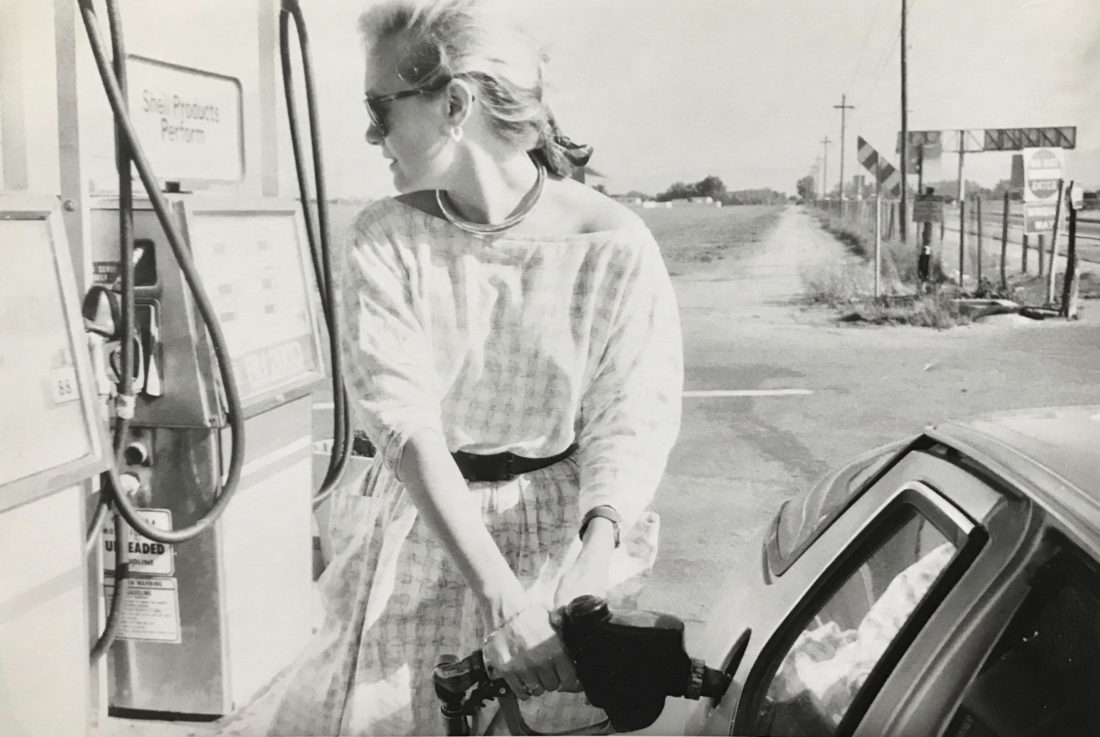
A good friend of mine recently found this photo of me that she’d taken when we were at university. The photo caused a flood of memories — not so much around the specific moment as I don’t remember where the hell it was taken or what road trip we were on — but about that younger version of myself, and what I have, and haven’t, wised up to since then.

I feel like these months have stripped me bare, having lost so many of the trappings that I use to prop up my ego. Some weeks I feel lost in it all and have a hard time feeling focused or positive about anything. Other moments feel like a ray of light comes out showing me the way forward. But through it all this sense of being raw. This kind of vulnerability reveals the throughlines of self.

So what would I tell the me in the photo? That she can relax and play more. She will find love, marry, and create a family. That a beautiful, creative, and eclectic home in California waits, and then it will be outgrown and reborn in completely unexpected ways in Italy. That the group of friends she met at college who felt like family would not be the first or only experience of such connection and that I’d be lucky enough to have people in my life who see me as I am and still love me. I’d tell her to take more risks. Fall in love more often. Look up more often. And above all, that striving for perfection is no life at all.

Sounds so easy when I look at the photo. But here I am, with the same unnamed fear somewhere behind my heart that she had, and a familiar litany in my head that differs in specifics but not in tone — I haven’t used this time to grow our business, blast Itch into the millions of readers and film and book deals, lose weight and get in the best shape of my life, become fluent in Italian, pick every weed in the garden, and more. And thus I am somehow less than.

And here we come to the wising up part. Mostly I am thankful that this period is tough as the times I change the most are when being the same is too hard. I feel like it is time for the ultimate showdown with the boring voice and its litany of ways I’m not perfect. That it’s more interesting to be in the moment and to celebrate the things that make me who I am and bring me pleasure.

I am spending time with the discomfort, attempting to meditate, reading a lot, and comparing notes with others. I’d love to hear from any of you who are confronting discomfort what is working for you.

Because when the future me looks at a photo of the current me I want her to say “That’s when you learned to trust and relax inside. When you really started to have fun, love yourself and be completely who you are.” And I probably won’t arrive there this week, or next month, as the voice of perfection would like, but I am closer than I was.


2
0
Tovaglia a Quadri

Bored at home yet? Come to the village!

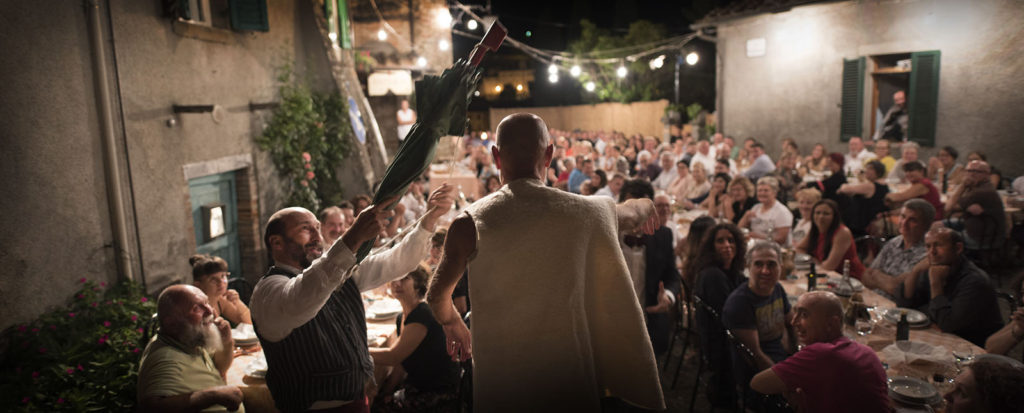
One of my favorite things that happens in our village is the local musical play, called Tovaglia a Quadri, performed every August in a tiny piazza filled with long tables. The plays are written a month or so before they go live and tackle current and controversial topics ranging from how Amazon touches village life to the Genoa bridge collapse. Tovaglia a Quadri is satirical, introspective about the village, and broadly performed, but hard to experience for non-locals as the dialog is in Italian and the local dialect, and tickets are almost impossible to get.

tovaglia a quadri

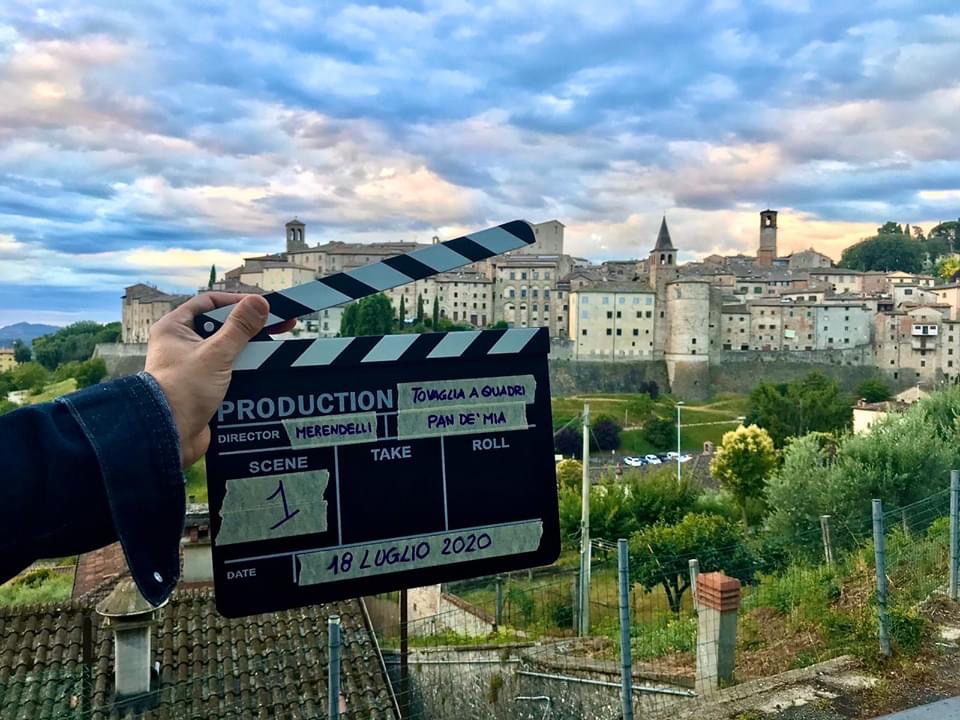
As with most things this extraordinary year the fate of Tovaglia a Quadri’s summer play was not looking promising — it wasn’t just the restrictions against crowds gathering in close quarters but also a prohibition against serving food at theatrical performances, which put a damper on the three-course meal. But this is the 25th anniversary of the play and the show must go on. The intrepid creators, Andrea Merendelli and Paolo Pennacchini, decided to make a movie instead.

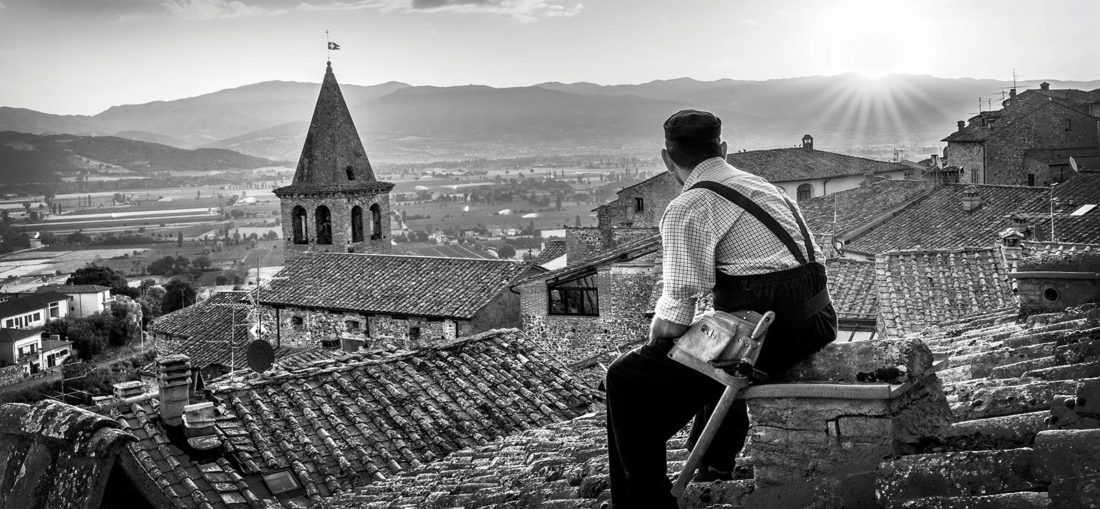
The movie will be subtitled in English and available to stream from August 24 – Sept. 6th — ten nights just like would have happened in our parallel “normal” universe. I can’t give too much away, but the plot is a humdinger. While Andrea and Paolo were writing the play there was a positive case of Covid-19 in our village. The person involved was a healthcare worker who had returned to Anghiari for the weekend from a city where he worked when he received the positive result. The reaction of several of the villagers was surprisingly extreme. Andrea and Paolo wove parts of this event right into the play. Their fictional character has to flee to the village rooftops to live, in fear for his life should he descend. Meanwhile the rest of the village is gathered around a community bread oven rediscovering the joy of making bread despite the shortage of flour and yeast. The title, as always, is a pun: Pan de’ Mia, which refers to the pandemic as well as means “My bread”. It’s a clever glimpse into one way that Italians are processing the horror of the epidemic with grace, creativity, and humor.

I’ve been at some of the shooting and the movie looks like a treat. Not only will be it entertaining but it’ll serve as a nice little escape to our village. There is a 15€ fee to stream the movie which helps to cover expenses. You can buy tickets here. A couple of production shots…


0
0
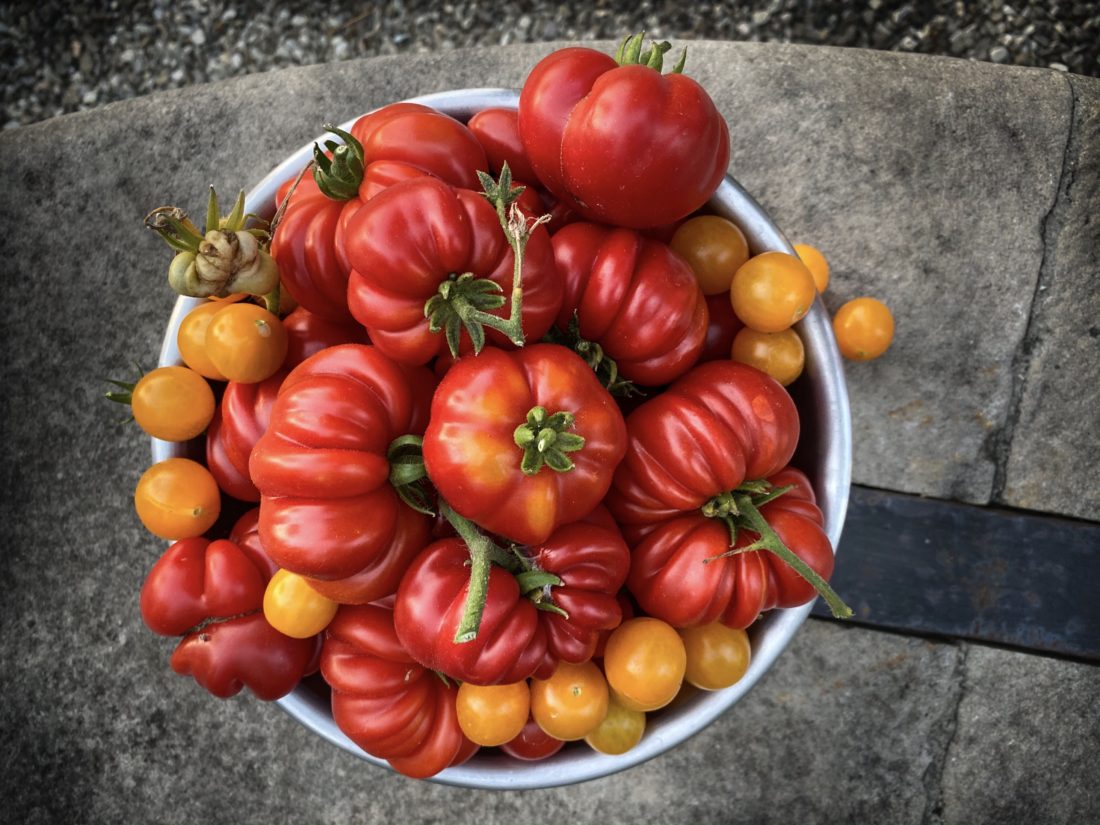
Tomatoes, harvest, vegetable garden, orto

Orto adventures

This summer we have become more deeply Italian by creating the thing that makes every house complete — an orto — or vegetable garden. Most houses around here feature one prominently in the front yard. We didn’t put in any wimpy things like zucchini that grow all over the place and I don’t quite know what to do with beyond one or two things, but we did plant loads and loads of tomatoes.

Here are two tomato ideas from this week.

Slow roasted tomatoes

This recipe is from one of my favorite chefs, Skye Gyngell, and is unfussy but yields a tasty result. Skye suggests plum tomatoes but we used a mix of what we had in the photo above, halved or quartered them depending on size, and placed them on baking sheets with parchment paper underneath (we had four going). Sprinkle liberally with a mix of equal parts salt, pepper, and sugar. Then place in an oven on the lowest temperature you can get for about four hours until the edges start curling up. You aren’t going all the way to sun dried, just mid-way there. We’ve found that they store well submerged completely under olive oil and in the fridge.

We will use them often from making paninis to salads, but first out the gate was a pasta with eggplant and sundried tomatoes from chef Francis Lam. Here is her recipe for what she calls Pasta With Let-My-Eggplant-Go-Free! Puree. When she calls for tomatoes we added the slow roasted ones above.

Heirloom tomato tart

A friend in my WhatsApp “Cooking in Quarantine” food group made this today and it is on the list for this week. She said it was absolutely delicious. Recipe from the New York Times. Extra bonus points if you make your own pesto, which I think we will try, as we also have basil taking over the orto.

0
0
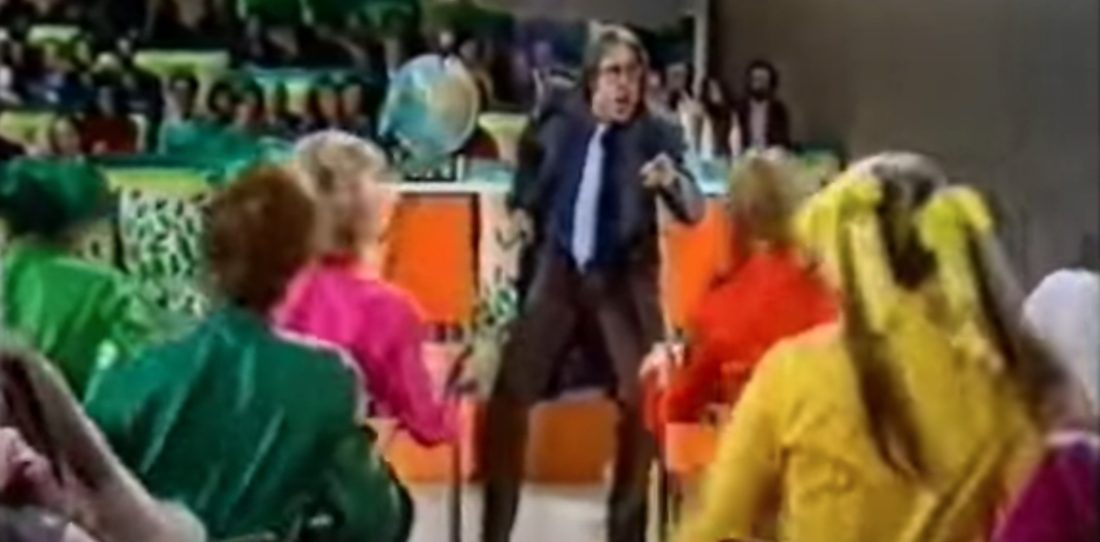
Adriano Celentano,

Drop everything and prisencolinensinainciusol

A friend recently told me about an Italian hit song from 1972, called “Prisencolinensinainciusol”, and I am obsessed. In the 1970s Italy was fascinated by all things American and Italian entertainer Adriano Celentano created a song that sounds phonetically like American English but is complete nonsense. He performs it below with his wife Claudia Mori. It is so effective that when John, Sebastian, and I watched the video we all had the same response — that it sounded so like English that our heads hurt because we were straining so hard to understand lyrics that were just out of reach. That if we just listened a little bit harder it would all become intelligible. It’s that good, and the video version is oh so fabulously 1970s entertaining. I think you should do yourself a favor and watch it. NOW.

The song not only reached #1 in Italy, but also in France, Belgium, and the Netherlands. I’ve cornered several village friends to listen to it now and in my small sample of Italians and a Belgian all remember it fondly. The Italians could sing it from memory. Although “Prisencolinensinainciusol” is complete nonsense clever Italian teens came up with a phrase in Italian that closely matched the sounds: presi in culo un etto di acciughe or “I took a pound of anchovies in my ass”. The eyes of the two Italians I was talking with lit up with amusement and recalled teen naughtiness at the memory.

There is a good article about the song and its history in Atlas Obscura. The song was not a isolated feat but part of a long tradition dating at least to the middle ages. Dante has a passage in The Divine Comedy that means nothing but sounds like Hebrew.  And there is “grammelot, a system of languages popularized by Commedia dell’arte, a theatrical form that started in Italy in the 16th century and later spread around Europe. Grammelot was used by itinerant performers to “sound” like they were performing in a local language by a using macaronic and onomatopoeic elements together with mimicry and mime.” (From the Atlas Obscura article.)

Adriano Celentano, who is now 82, is one of the Italian greats. In addition to being a singer-songwriter and performer with over 40 albums he is also an actor and director starring in numerous comedies on the big screen and TV. He started a record label which is still active. Claudia Mori is a prolific musical performer, actor, and producer who often collaborated with her husband. They are still together.

0
0