Live Archives - Page 8 of 13 - Itch.world
A three-minute escape to Italy.
Tuscany, travel, medieval village, Italy, festivals, celebrations, customs, cooking, recipes, living in Italy, moving to Italy, visiting, visit, restaurants, language
39
archive,paged,category,category-live,category-39,paged-8,category-paged-8,wp-theme-stockholm,ajax_fade,page_not_loaded,,select-theme-ver-4.4.1,paspartu_enabled,wpb-js-composer js-comp-ver-7.9,vc_responsive

Seven ways to beach like an Italian

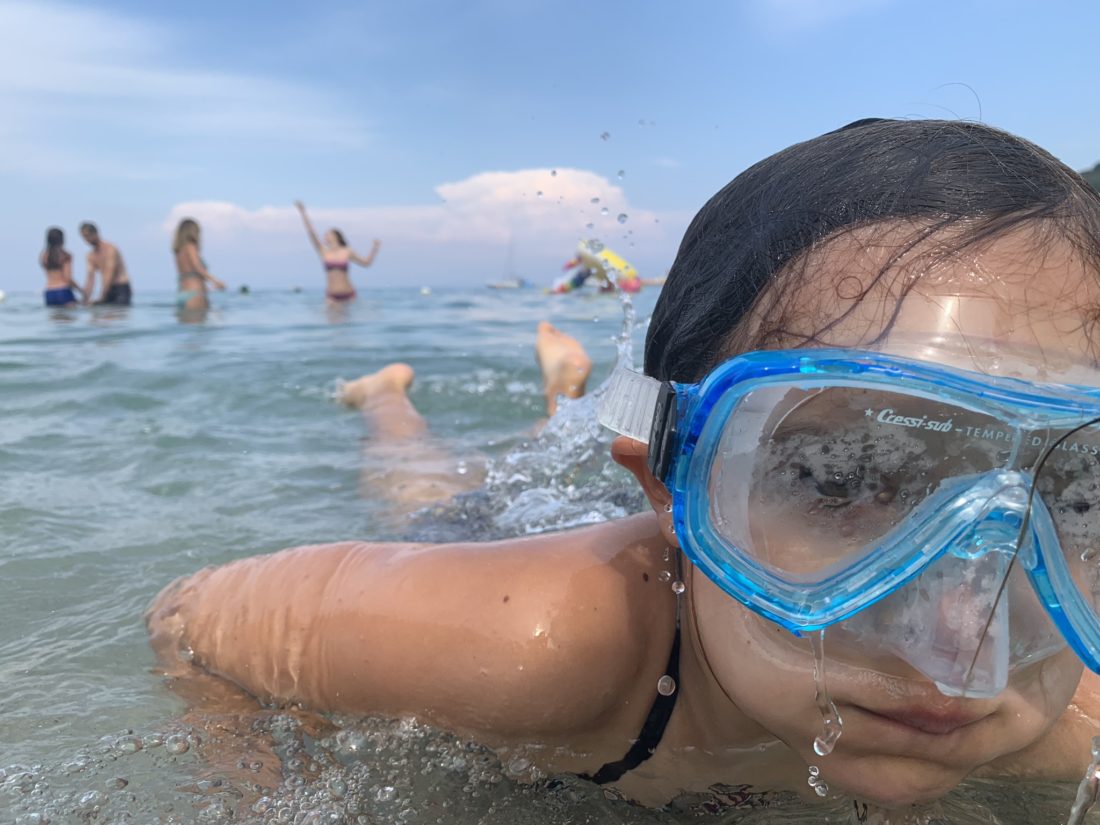
After taking a brief break from Itch to spend time doing August-y things with visiting family and friends — which I decided is truly Italian — it’s time to get back to writing. While doing vacation activities, like hanging at the beach on Elba Island and our neighborhood pool, I’ve noticed a few ways in which Italians relax differently.

1. The more crowded the better. Why would it be any fun to go to the beach or pool when it is not packed? The reason to be there is to see and be seen, hear the latest gossip (le chiacchiera), and know you are in the right place because everyone else is too. Any civilized beach will offer chairs and umbrellas to rent in rows as closely packed together as possible — beach to beach these range widely in price and luxury level. Having a chair is really important as it provides a base of operations and a place where you can leave your things when you go to a long lunch.
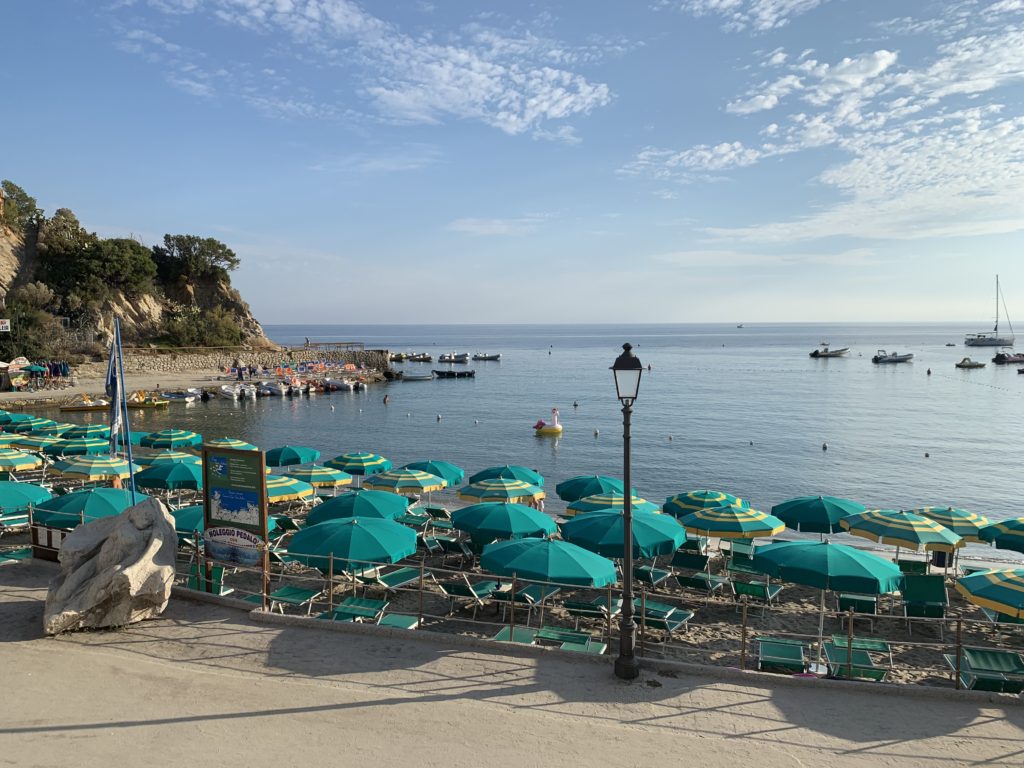
As I’ve already told you in my Venice post, when we first moved to Italy and were living in Venice for six weeks we went to the Lido to go to the beach late one afternoon. After picking our way through a field of bodies to get to the water we went out swimming, facing the horizon. After less than an hour we turned back to shore very surprised to discover the beach was totally empty. It was, after all, time to leave and get ready for dinner. That was one of our first hints that Italians love to travel in packs.

A friend just told me that there is no exact translation for “privacy” in Italian because it is considered a sad, lonely, irrelevant, and undesirable thing.

2. Don’t forget lunch. We are not talking about a sandwich and soda. The Italian love of lunch — in smaller towns everything still shuts down between 1 and 3:30 — extends to the beach. Make sure to reserve first thing in the morning in one of the many seaside restaurants and plan to take at least an hour and a half. You will want to make sure to have several courses, a bottle or so of wine, dessert, and coffee afterwards. The star ingredients will be all sorts of fresh seafood, especially shellfish. My mouth is watering right now thinking about the black squid ink risotto with mussels I got a bite of. And don’t forget that you will also be having a large and leisurely dinner. (This may have something to do with #6.)

3. The flock migrates. Every year Italians often have their summer vacation with the same friends and family at the same beach, staying in the same hotel or house, and even renting the same cabana or beach chairs. On the Lido there’s a long waiting list for these little huts and chairs as they are rented year after year by the same family, and they are expensive, several thousand euros for a season. One family will rent and then split the cost between numerous relatives and friends who come to share their small plot of beach.

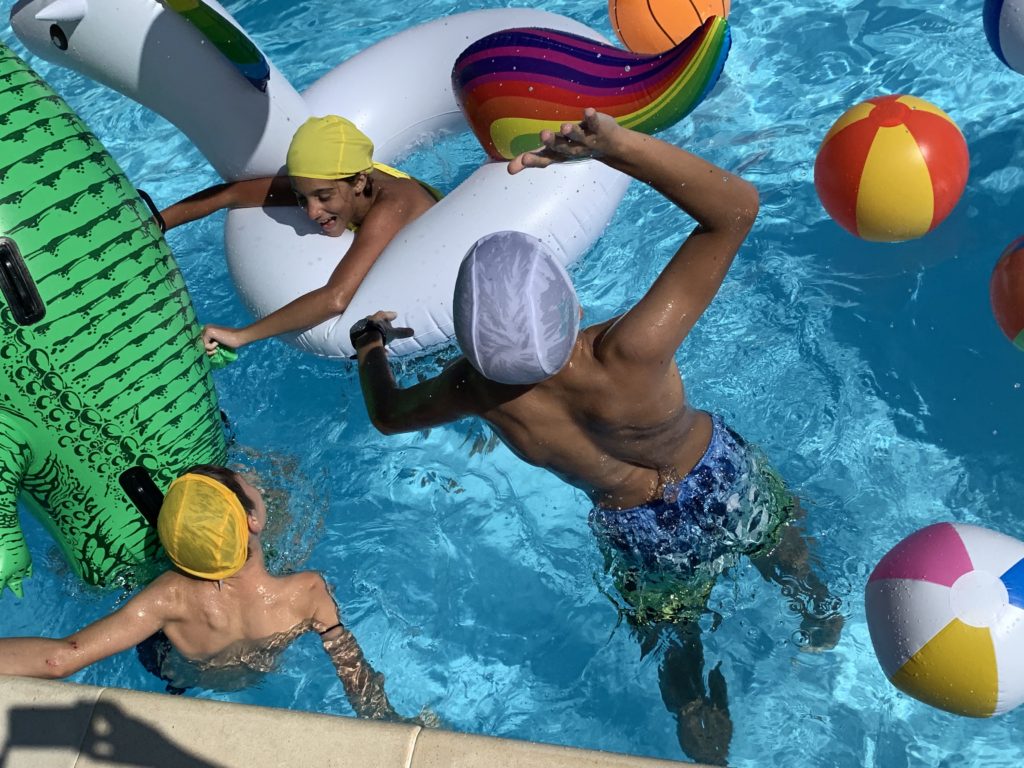
4. Bring toys. It’s vital to have the two paddles and ball that are batted back and forth in the small open territory between the chairs and the water’s edge making walking along the shore impossible. Rafts and floaties are also important. Unicorn rafts seemed to be especially popular this year.

5. A tan proves you were on vacation. Apparently the darker the better is still the thing.

6. Strut in a tiny bikini (no matter your body type or sex.) I love this part so much. I’ve been swimming at the local pool this summer and consistently notice that all shapes and sizes of bodies are showing it off with equal confidence and enthusiasm, often in suits that are so tiny that they are virtually naked. I’ve been so used to the vibe in the States where those who have great bodies strut, and those of us who don’t wish for an invisibility shield, but settle by trying to shrink into the background in swimsuits that cover as much as possible. This equal-opportunity freedom to strut totally changes my relationship to the pool and beach.

7. Do not confuse swimming with exercise. I am always the only person doing laps at the pool and am looked at with concern and alarm as if an intervention might be needed. This was equally true in the sea in Elba. It all came to a head that time I decided that I had to get some exercise at the local pool only to discover that it was Pool Toy Day. I am still American enough that I did my laps anyway. And counted laps on an Apple watch. Oh well.
0
0

Is skateboarding a crime?

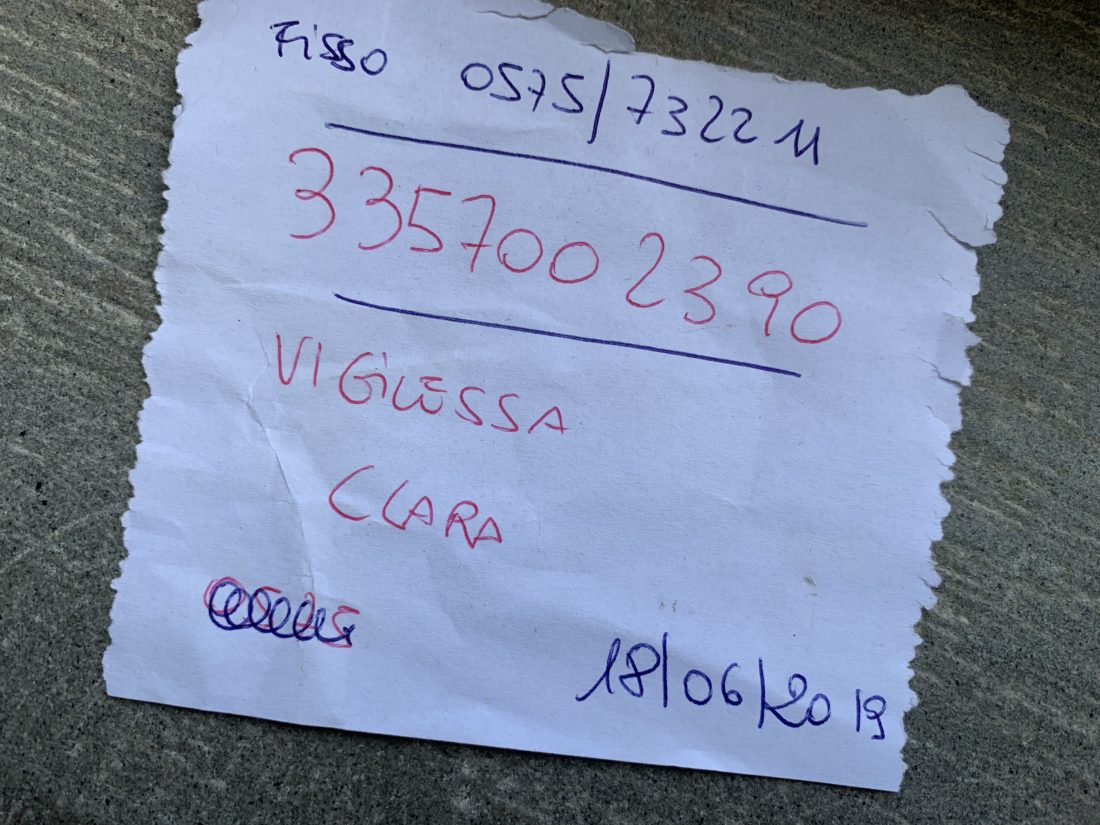
One morning the bell on the front gate rings and one of neighbors, a policewoman, is standing there in full uniform. She hands me this piece of paper and tells me that I must call to speak with the police in the next village over about Sebastian and skateboarding.

Sebastian has been really into skateboarding this summer and spending hours every day at a local skatepark with friends. What could possibly go wrong?

I couldn’t make the call until the afternoon as I wanted all of us to do it together, having no idea what we were in for. It seemed to be a good idea to have Donella for her Italian, John for father-figure moral support, and Sebastian, so he could atone for his clearly numerous, although not yet disclosed, sins. I had a significant knot in my stomach all morning.

The moment to make the call comes and we all stand around the kitchen table with the phone on speaker. You can feel the tension. We make the call and it rings. This perfectly nice woman answers and says she’s so glad we called. That she’s a mom and a friend of our neighbor and just wanted to say that our son and his friends have been seen a couple of times skating outside the park—on roads and the main corso, or pedestrian street of the medieval town—which is dangerous and not allowed. She also thought that one of the group was a bit too old to be hanging out with them and just wanted me to know all of this. As one mom to another. Then she wished us a great day.


0
0

Why I like going to the dentist

One of the scary things about moving to a new country, culture, and language is doing things like finding a new dentist. There’s such a comfort level built up with trusted doctors and dentists and it’s unsettling to walk into the unknown when your body is involved. I was hoping to find competence, but was surprised to find incredible skill married to something else—that ability to relate on a human level in professional settings that it something I treasure about the Italians.

Our journey started when we had a dental “emergency”. One Saturday morning, the day of a big high school dance, Donella’s front tooth chipped. We got a referral and phoned the dentist, Marco, who we’d never met. Donella explained the situation, and although we were not his patients, he was sick with the flu and had a fever, and the office was closed, he immediately agreed to meet her and fix it before the dance, never for a moment questioning that this was a big deal.

So the whole family started going for the whole range of normal dental stuff. John and I had some quite elaborate crown-like work done with great success. Marco is a film and music buff and has an amazing collection of DVDs. He is equal parts artist and dentist so when you get work done it takes as long as it takes to make it perfect, which gets even longer when he stops for minutes at a time to analyze a scene from a movie that we are watching, or to search for an obscure piece of music that he is reminded of by the piece that’s playing.

But then we needed to have Donella’s wisdom teeth taken out. My American worldview is that there’s a line you cross with things like wisdom teeth and root canals where you need a specialist oral surgeon, so I was surprised when our dentist said he could do it. With great trepidation, but a foundation of trust we built about his skill, I agreed.

The Italian style of removing wisdom teeth is that you take one or two out in a session. We insisted that all four be removed the same day, which he was very reluctant to do, but said he’d try. We show up for the procedure and I ask about what beyond normal numbing is given for pain—I certainly needed every bit of the “twilight zone” I was in when I had mine removed. Donella is a bit odd about teeth—loved when she had loose teeth and she could wiggle them out. She was the go-to kid in elementary school for all the other kids with loose teeth cause she was so good (and fearless) about pulling them out. But that’s really different from having wisdom teeth pulled.

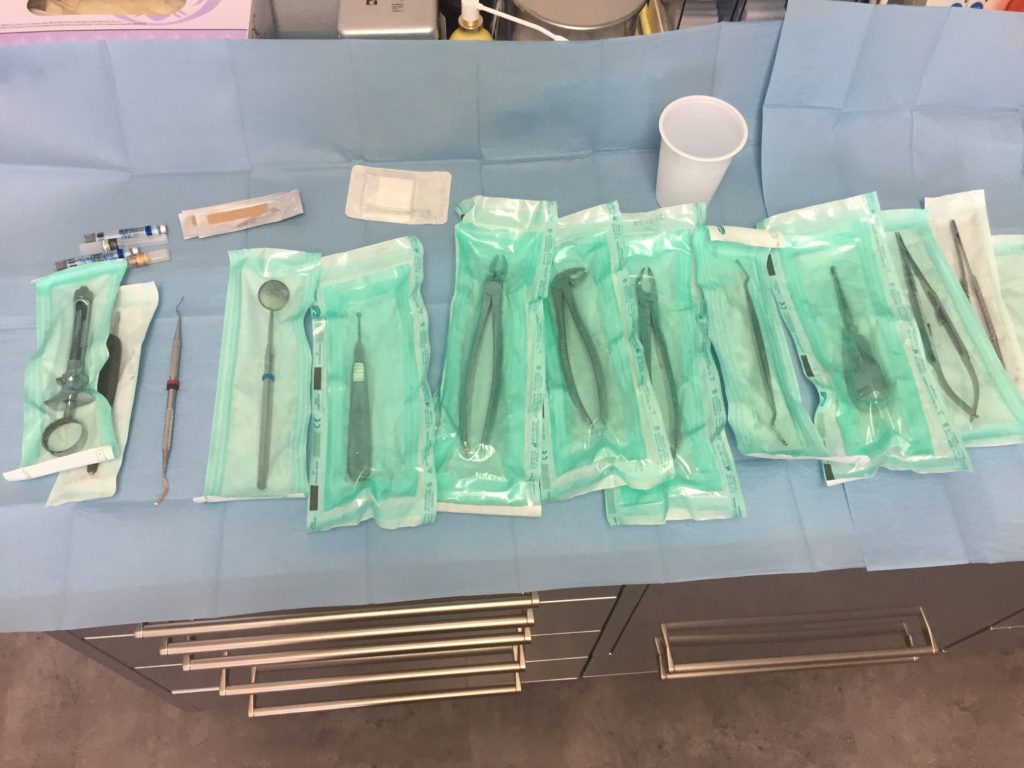
He said he nothing beyond numbing. I insisted that we at least had some Valium on hand in case she needed it during the procedure and he agreed and wrote a prescription. I went off to the nearby pharmacy to fill it, especially after seeing the array of tools on hand.

I return to the office just in time to hear Donella scream. I instantly morph into super-Mom calculating how far to the nearest airport, how quickly we can get her to a surgeon in the States, etc. etc. I go to the door, peek in, in my best confident voice assure Donella that I am back, standing by if she needs anything, and silently willing her to walk out if needed. Turns out that the shot for numbing was a bit more intense than she’d expected.

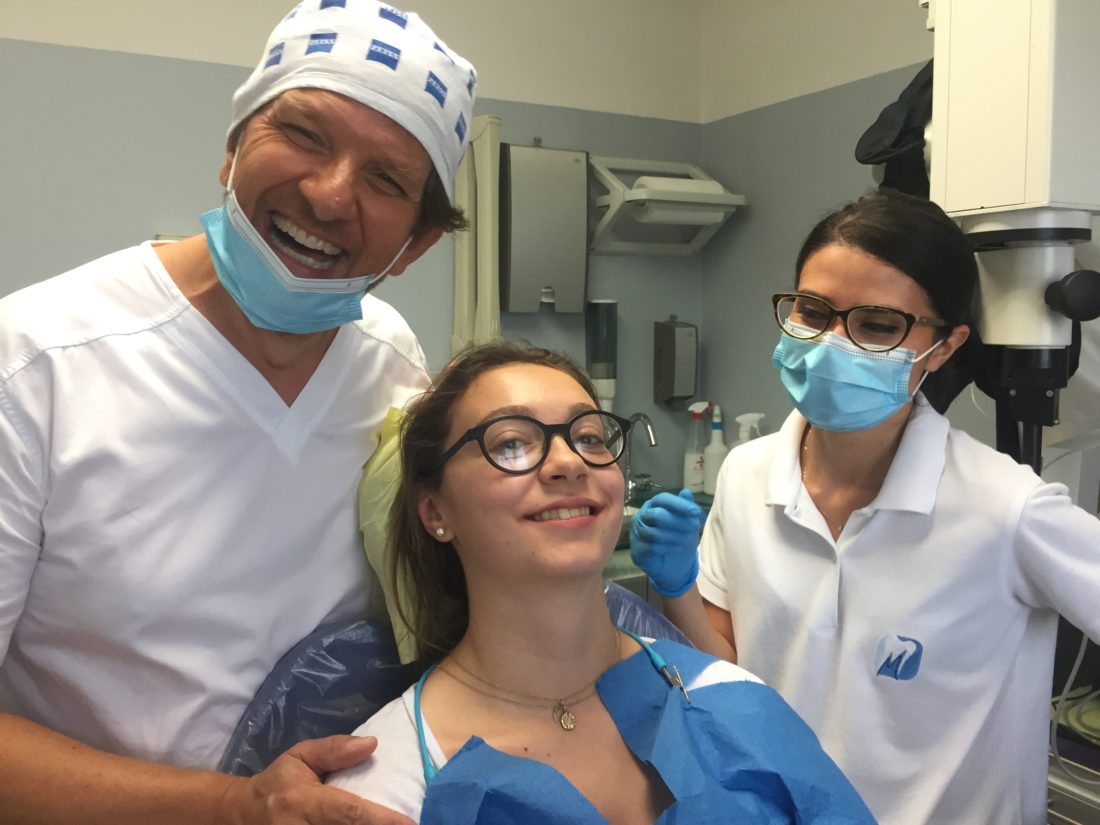
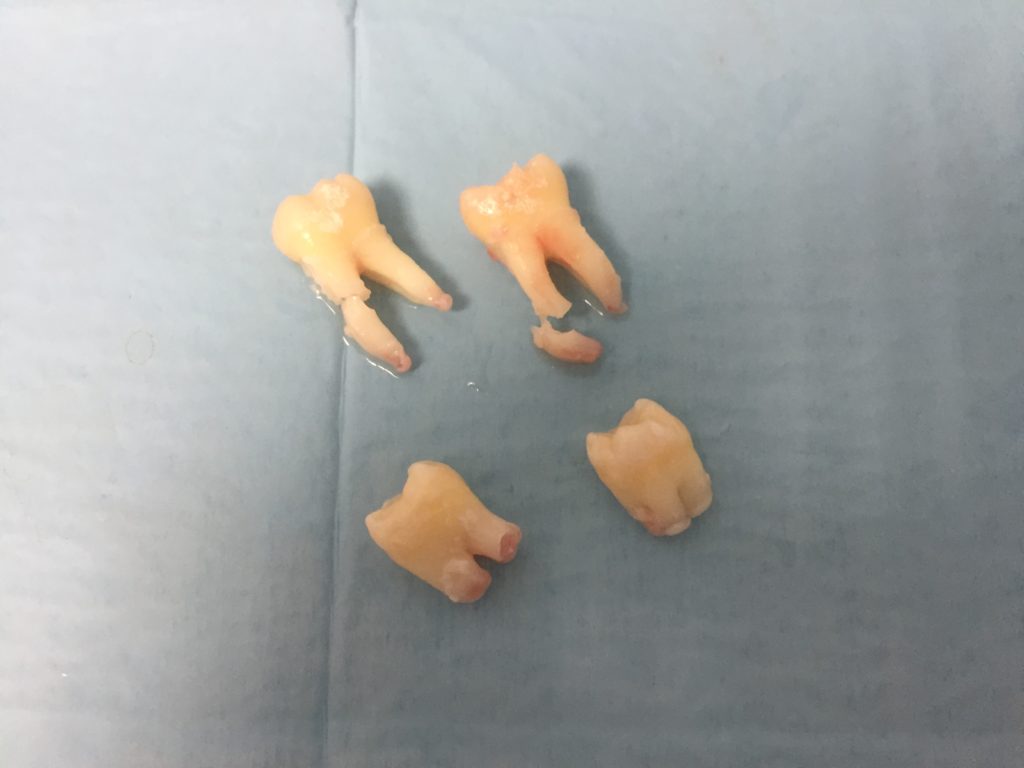
In the waiting room I am shaking and feeling a bit sick with nerves, really regretting this level of going local. About twenty minutes pass and then I hear laughing, cheering, and chatter. The dentist comes into the waiting room holding a tool with one tooth aloft. I go into the room to discover that he’d let Donella remove her own tooth, and she is saying this is the most fun she has ever had.

Hmmm. This was turning out a bit differently that I was thinking. The scene repeats itself three more times—she ends up removing two of the four herself. After all four are out the mood in the room is completely triumphant.

The dentist later admitted to Donella that he was so stressed about removing all four that immediately after the only thing he could do was drive to the sold-out Umbria Jazz festival, where he met a guy outside selling an extra ticket for a front-row seat. He stood there for hours, soaking in the music, and celebrating an excellent day in the office.


0
0

Changing the air

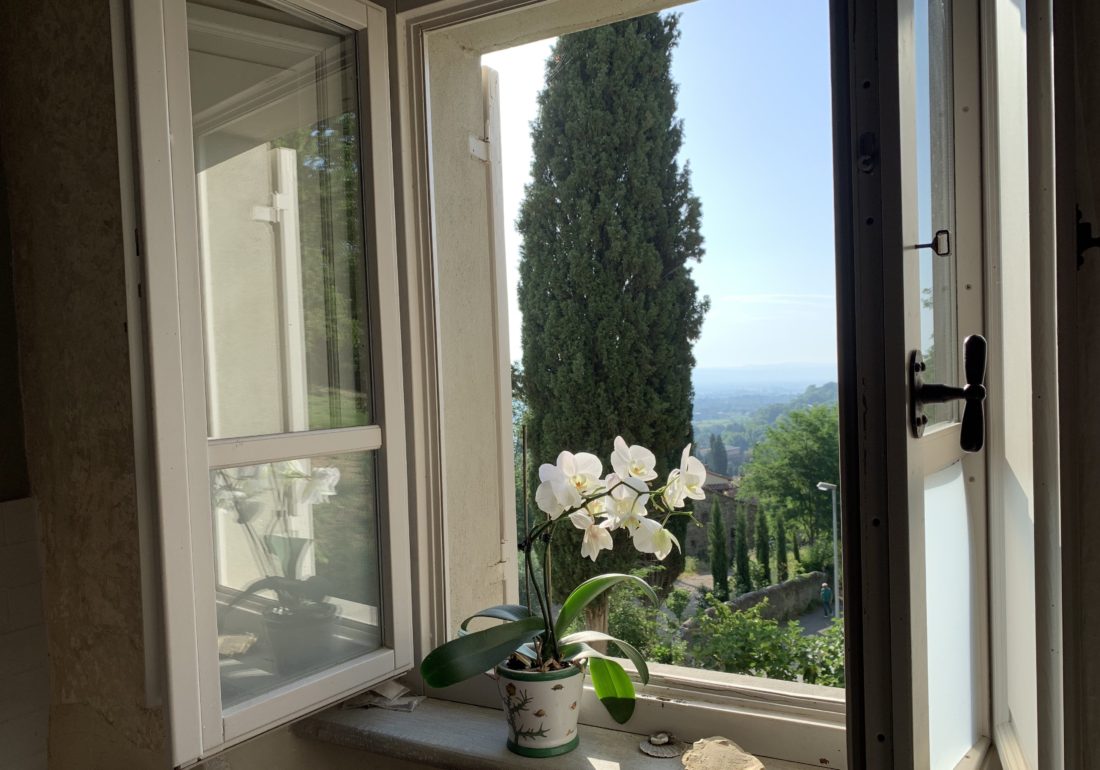
It’s been hot this summer—not like it was in France—but still hot. In case you are curious about how Italians manage the heat, considering that there is almost no air conditioning, here’s how it’s done. Most buildings are made of stone with thick walls that serve as insulation. You air the house out in the early morning when it’s cool and then shut all the windows, keeping the cooler air inside. (The Italians call it changing the air.) Shutters are very handy because if you close them on the sides that get direct sun they provide a second layer of insulation.

This morning this is what greeted me in our bathroom during the morning airing, and I thought it was pretty.


0
0

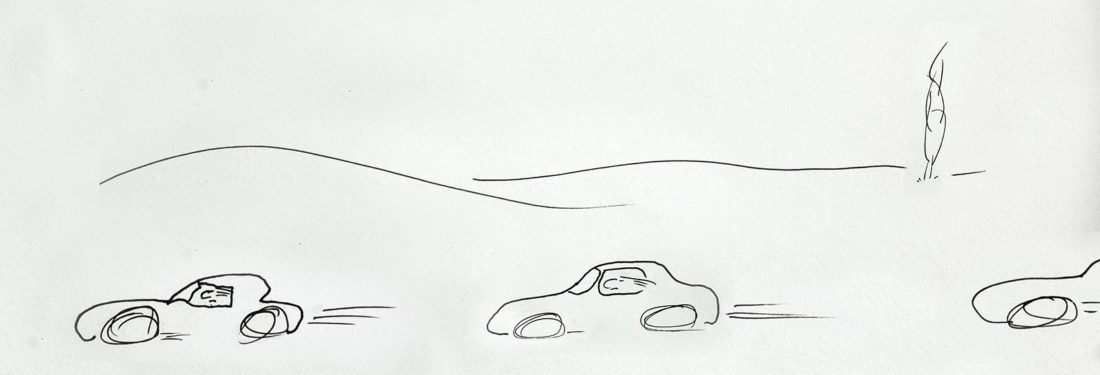
A line of Indians

(Part of a series on driving in Italy.)

When you are with a group of Italians who suggest all following one another to a restaurant, at a location about an hour away, in seven separate cars, and they aren’t sure exactly the name or location of the destination so can’t provide it for your GPS, but aren’t worried as you will all follow each other in a fila Indiana, just say no. Make up any excuse. Trust me.

This just happened to Donella and I leaving a horse show about two hours south of us. A big celebratory dinner was in order for the group, and we were off. Donella informed all of them that she’d just gotten her license and that she didn’t want to go too fast, and all agreed.

Here’s what happened. They were all perfectly well-intentioned to be easy to follow and not to lose the rest of us in line. (Of particular importance to me, as the last car.) But then then divided freeway opened up in front of the first car after the small rural roads. And the lead car saw the second car following him closely and did what any Italian’s instinct is to do. Speed up. This whole thing magnified kilometer after kilometer for our 70-kilometer jaunt. Although this was not a particularly great road—certainly no autostrada—we were all following each other at speeds up to 160 kilometers per hour (99 miles per hour) on a road where the maximum speed is 110. I was white knuckling the whole thing as our little train of cars passes car after car. We even passed an Audi. (If you remember from a previous post Audis are usually always the rude car behind you trying desperately to pass.)

Donella was in front of me, driving our old car which starts shaking madly at more than 130. (The other cars in our group included a Porsche and a Mercedes.) I didn’t want to call her to tell her to forget the whole thing because I didn’t want to take my attention off the road for a second, nor hers. I’m terrified, angry, and amused, and don’t have the language or cultural chops to take this on. I wonder what a real parent (not someone who merely pretends to be one) would do in this odd situation. The obvious thought to overtake her and then slow down—a lot—did not occur to me. I reflected that I probably wouldn’t be having this problem with a group of Americans taking a bunch of kids to dinner after an athletic event.

We reached a section of road work where we all merged into one slow lane and after that things got better. Turns out Donella had called the lead car when we were all going slowly and told them off.

When we arrived at the restaurant Donella and I were shaking. I sat next to the lead car driver, who I don’t know well, and felt struck dumb to address what I was feeling. When I calmed down a bit I asked him what happened, and he said that he saw the second car following him closely and thought that they wanted him to go faster, which he did. I guess there was some part of the concept that the car was supposed to be following that was momentarily lost. For 70 kilometers.

So, just say no.

0
0

More cheese rolling

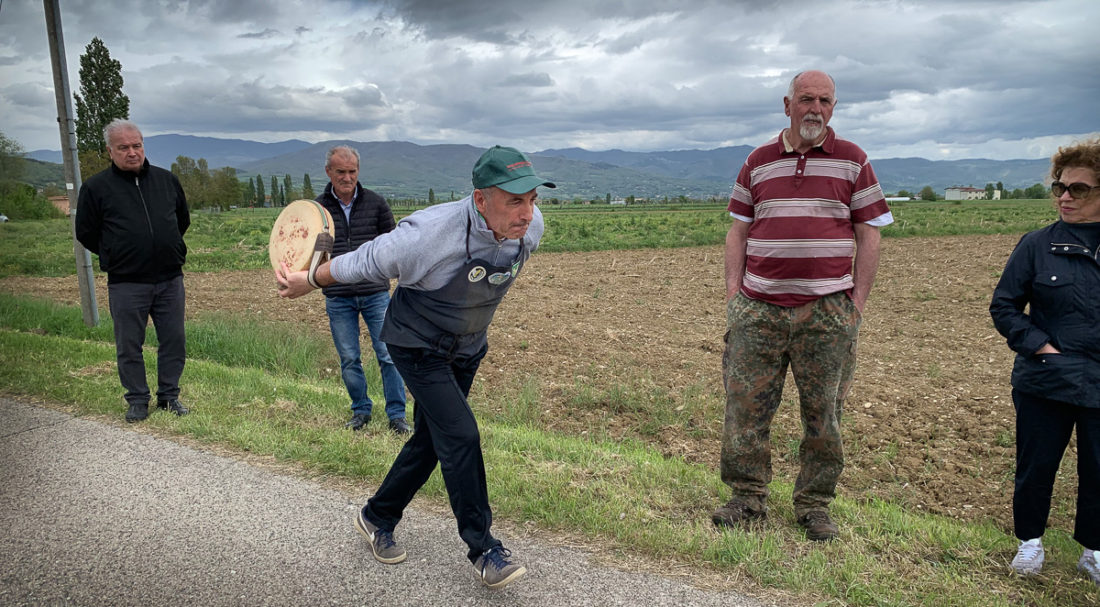
I was driving some friends home the other Sunday after a hike when we were stopped by the road being taken over by a cheese rolling competition—it appeared to be at least the regionals by the size of the crowd and number of teams and participants. I captured thirteen seconds of a very solid throw for you:

It was such an important competition that they even had the, if you will allow me, big cheese category, the Parmigiano. Which weighs around 55 pounds and requires a back brace. Unfortunately that event happened earlier in the day.

Cheese rolling is dear to my heart as it was an early subject of an Itch column, so you can click through to read all about the history and rules of this fine sport.

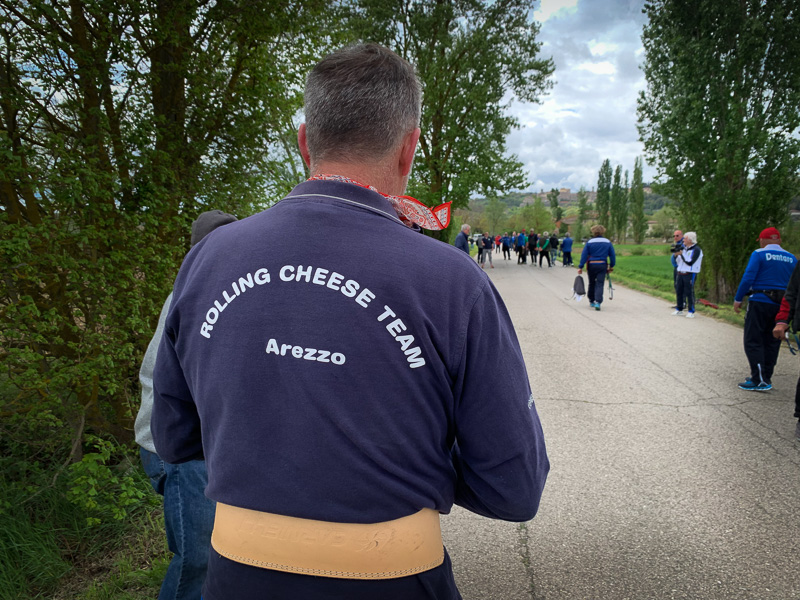
I loved that, for some reason, the all-Italian speaking team from Arezzo decided to name themselves in English.

0
0

The world of Italian women shepherds

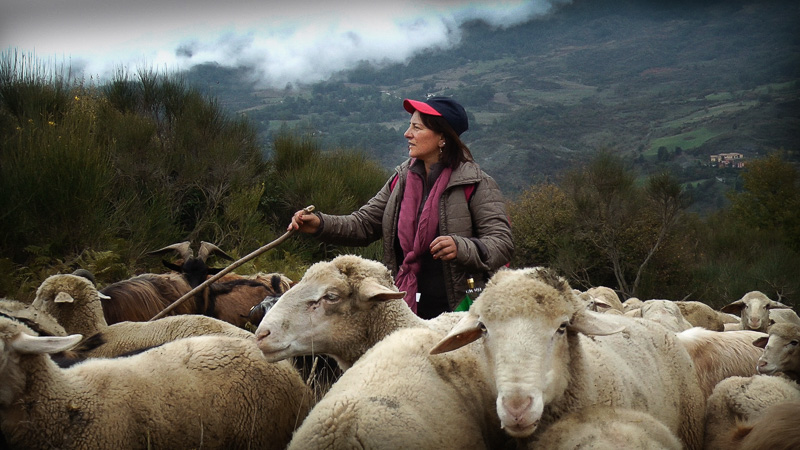
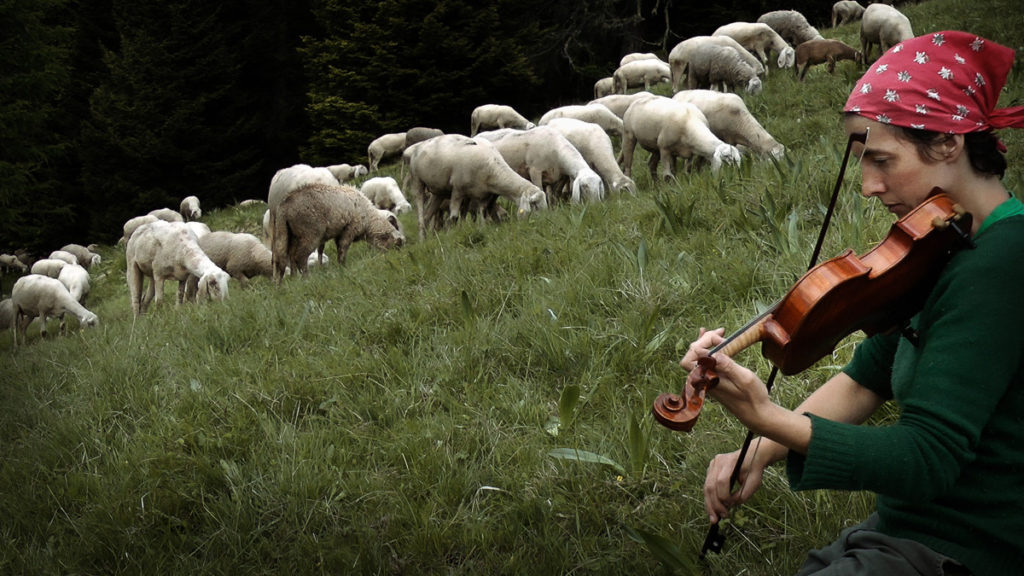
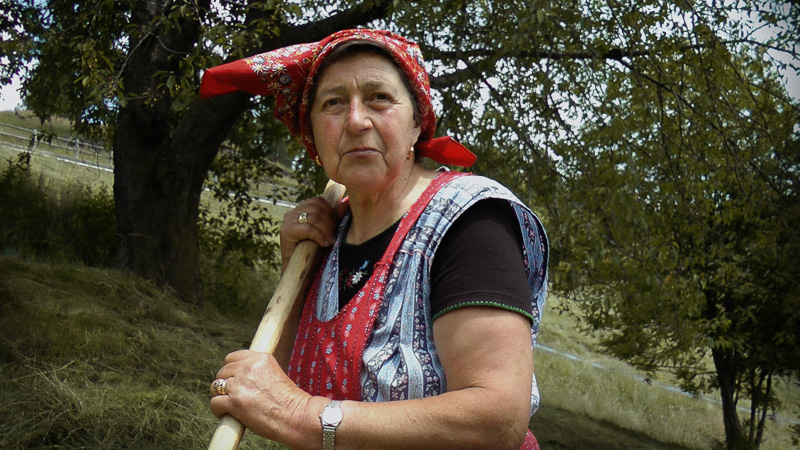
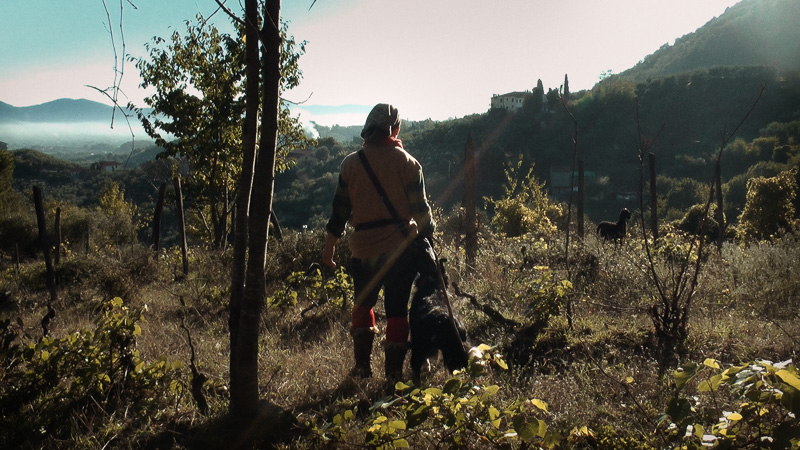
I am lucky enough to have been forwarded a link to an Italian documentary, In Questo Mondo (In This World), about women shepherds. I was transfixed for an hour and a half—caught up in the lives of these women, ranging in age from 20 to 102. Living in the most primitive of conditions, doing physically grueling labor, walking miles per day with the flocks in all types of weather, spending their time almost exclusively in the company of animals, and always being on the very edge of financial viability, these women told similar stories of rebellion, following their hearts, and finding contentment.

(photo copyright of Anna Kauber and used with permission)

The film is gorgeous, leisurely, and immersive. Watching it I felt as if I was transported as an invisible observer into these women’s worlds. I was curious about the film so I tracked down the director, Anna Kauber. She was a delight to talk to—smart, articulate, curious, sophisticated, and funny. She is an agricultural scholar, fascinated by Italy’s agrarian past and present. She came across the subject of women shepherds and began, as she calls it, a pilgrimage to meet and understand them. Her desire to learn and know rather than ask a few questions and leave is why the film has such an immersive and quiet feel, and why it moved me so much. Anna would spend a minimum of three days with each woman, living with her day and night, and film nonstop, never asking questions or doing a formal interview. As the women became more comfortable they would begin to open up and tell her about their lives and feelings in the most natural and intimate way possible.

Anna ended up spending over two years filming, living out of her small yellow Fiat, covering 17,000 kilometers in every part of Italy. She spent time with over 100 shepherds, with 22 ultimately ending up in the film.

Rosina Paoli thinks that the prevalence of depression comes from being so removed from nature. “I don’t know what ‘depressed’ means. Just come up here and hoe! That’ll cure your depression!” (photo copyright of Anna Kauber and used with permission)

As different as these women are from one another in age, location, and education, a few themes crossed almost all stories. These women say their relationship to animals is different than male shepherds. They name individuals in the flock (and many will come when called by name), know all their personalities, and are deeply kind. Anna told me that male shepherds joke that if a lamb is born with a problem they will work hard for a couple hours to try to save it, but that a woman shepherd will do whatever it takes, for as long as it takes, to save the lamb. Several of the women spoke of the more distant and transactional (even occasionally cruel) relationship that male shepherds have with the animals, where they feel much more maternal.

(photo copyright of Anna Kauber and used with permission)

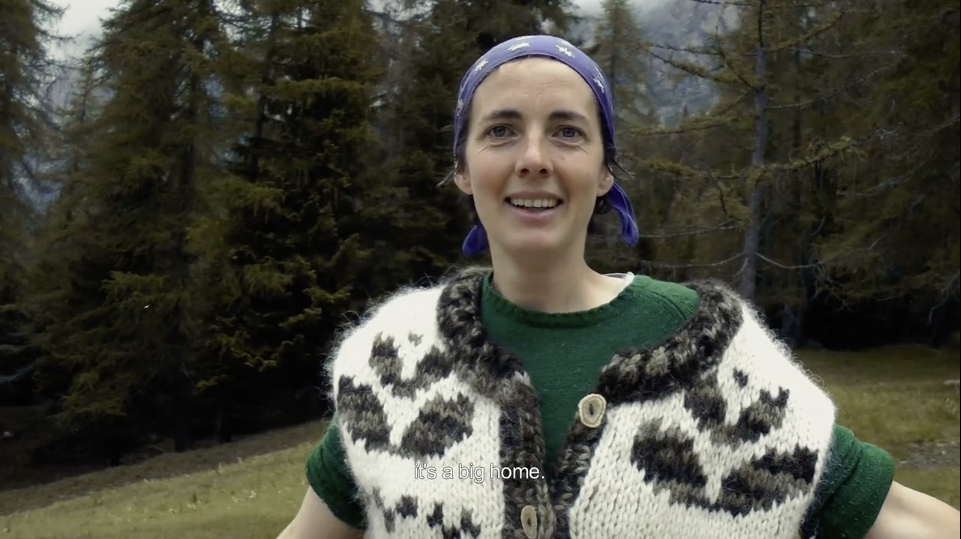
Most of the women had needed to fight to become shepherds. Traditionally it is not a role that women are seen as capable of doing and many had to rebel against family, society, friends, and male shepherds. But it is a life they find freeing and rewarding. As Caterina de Boni Fiabane says, “I fell in love with the phenomenon of seasonal migration, of not always staying in the same spot, having your home be more than just a small town. My home goes from here to Friuli. It’s a big home. I move, starting from here. Everywhere I go I know people. I feel at home, it’s wonderful.”

(photo copyright of Anna Kauber and used with permission)

Anna felt that the time she spent with these women changed her. She said that she was impressed by how much the women were content and lived in the present moment. Whether it was pouring rain or glorious, whatever misfortune or wonderful event happened, they faced it head on.

The film is a labor of love by Anna, with some additional crowd-sourced funding. It has been doing well on the Italian film festival circuit, winning Best Italian Documentary at the Torino festival, Best Documentary of the Year at MAXXI Roma, as well as awards in the Brescia and Trento festivals.

Unfortunately due to some funding restrictions I can’t share the link to the film widely, but let me know if you are interested in seeing it, or have an inspiration to organize a screening in the U.S. or London, and I can provide a link. (It is subtitled in English.) Anna (and I!) would love to get it out into the world.


3
1

Postcard from the farm stand

It continues to be rainy and cold. I need to get out of the house so I suggest lunch at the farm stand. John and Donella don’t want to come, so I go alone. Inside there are three tables. Two are filled with workers who I often see eating there and they all say hello. A small plastic table with folding chairs is still sitting empty, pushed into the corner next to the wall. It’s warm inside, the Giro d’Italia is on the TV, and everyone is watching.

The menu changes every day and today’s choice is pasta with barely cooked fresh cherry tomatoes and basil, followed by a steak. The pasta is perfect—a local type of onion making it sweet along with the punch of the tomatoes. I call John and tell him he must come and I save half my pasta for him. The owner takes it away to keep it warm. Donella decides to join us after errands and we add her to the corner of the folding table.

The owner and workers share theories and predictions about the Giro and try to explain race strategies to us. The workers leave and the couple that run the farm stand sit down for lunch at the next table. They jokingly want to know if we want another lunch prepared for Sebastian at yet another time. Our pasta, steaks, grilled vegetables, wine, strudel, and coffee come to 20 euros.

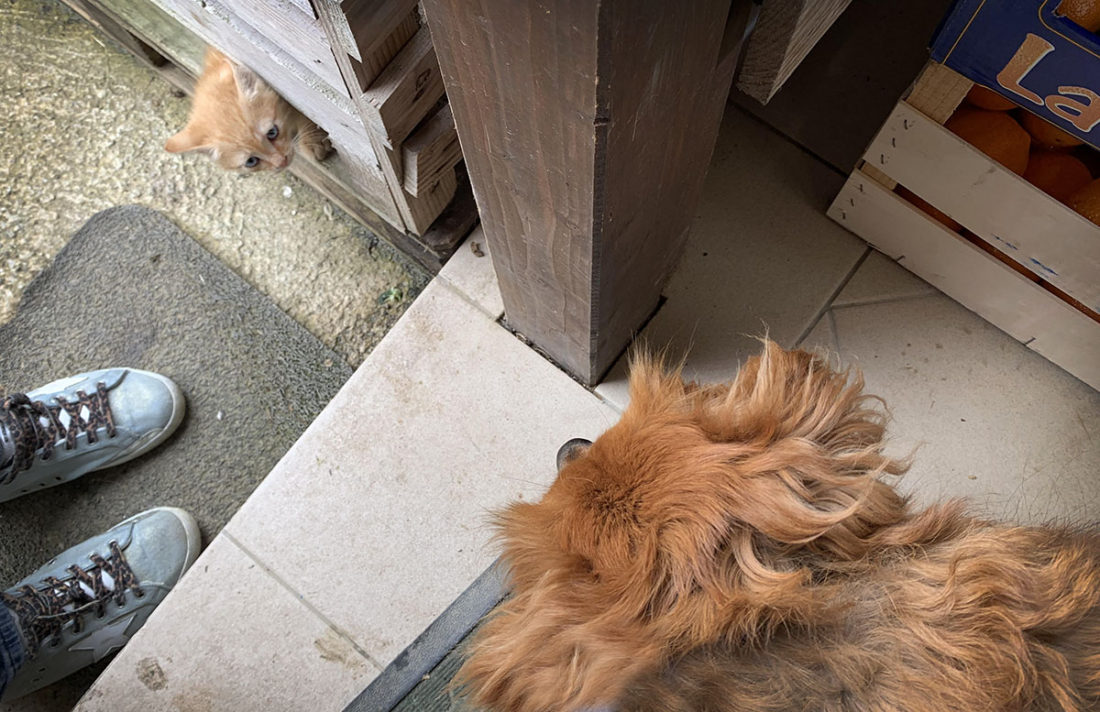
There’s a new kitten, only a month old and really too young to be away from its mother. Donella holds the kitten and I get Lola, who is a true kitten whisperer, out of the car. We let them run around together and the kitten is in equal parts courageous and frightened, not sure if Lola is mother or dragon. Lola lays on the ground, off her leash, and looks away when the kitten approaches to make it more at ease. Soon the hen and her two baby chicks join the mix.

As I leave the sun comes out over the valley. My heart is full.

0
0

Passing as Italian

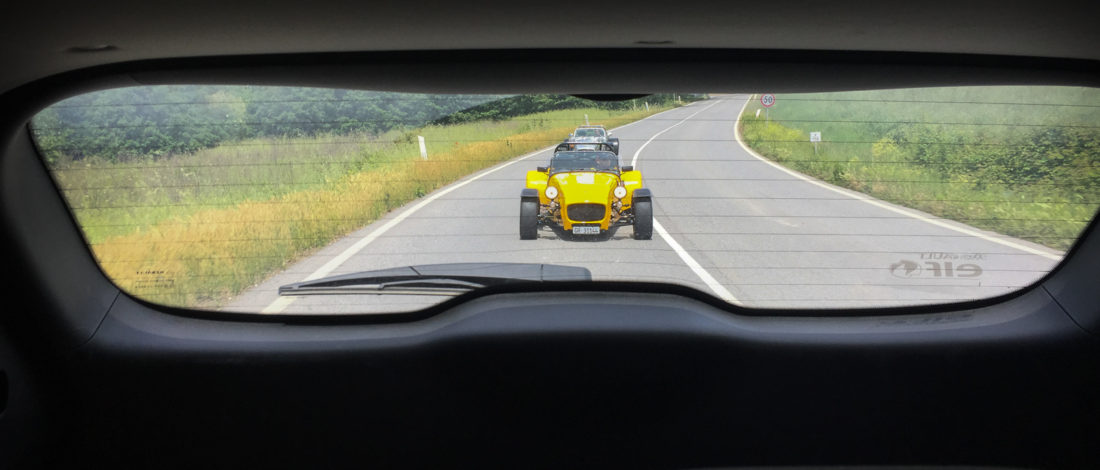
(Part 3 of a series on driving in Italy. Photo is out our back window one day when we found ourselves in the middle of the famed Miglia Mille rally on our way to lunch. Full disclosure, both cars did pass us.)

One of the most important things to master to drive well in Italy is the art of passing. The first thing to know is that Italians drive when they drive. There is no drifting along in your lane, thinking of what really should have been said in that meeting, or what to make for dinner. (This generality does not apply if the driver is in an older white or green Fiat Panda. That self-identified group has their own distinct norms and behaviors—the subject of a future Itch.)

The norms of passing are most evident on the autostrada. Rule number one is that you never drive drifting along in the left lane—which is used only for passing. You wait your turn in the right lane behind the car or truck you want to pass, looking in your side mirror while cars blast past, then pull out, pass, and quickly reenter the right lane before another car comes up on your rear madly flashing its lights for you to get out of the way. And know that if you are not regularly being trailed by an irate driver in an Audi flashing lights then you are going far too fast.

Passing on local roads is not an occasional thing but something you do constantly, which I guess has to do with the wider variety of vehicles on the road than what I was used to in America. We contend with the full range of under-powered scooters, three-wheeled vehicles called apes (pronounced “au pey” which in Italian means “bee” — not to be confused with the Vespa, or “wasp”). Then there are the tractors, trucks, and previously mentioned white or green Fiat Pandas. All require passing.

The rules for passing are well-documented and necessary to master in driving school, but nearly nonexistent in practice. It’s up to everyone’s definition of common sense—like parking. Friends who were staying with us were marveling at having been passed on a striped-off section of road leading up to a tunnel. I knew exactly where they meant, having become Italian-enough by now to pretty frequently use this particular patch of road—just wide and long enough—to pass somebody before reaching the tunnel.

In general all of this passing works out well, with a great deal of common sense and politeness, as least in our area of Italy. But one time I was passed I got so angry that I actually followed the offending van to have a word with the driver. I had been waiting in the left turn lane at a light, the light changed and I started to move forward, when suddenly this white van behind me pulls out into the oncoming lane, passing me to the left of my left turn lane, to make the same left turn. This could have resulted in a head-on collision with oncoming traffic. I followed the van to the local hospital where he stopped and much to my delight there were two policemen in the parking lot. With Donella’s help, and full of fury and indignation, I spewed my tale of catching this rogue in an act of very, very unsafe driving and demanded that they ticket him, or at least yell loudly. The police officer glances up the hill to where the white van is now parked near a small door going into the hospital and says that he understands my frustration but isn’t going to speak with the driver. “He’s picking up a body at the morgue. A difficult job. Sometimes things in life that are hard make you drive badly.” I kinda got his point.

A small detail from driving school rules I found interesting. The person being passed is equally responsible for the safety of the event as the person doing the passing. I don’t remember a similar law in America. It seems a bit unjust, but also oddly mature and pragmatic. An odd reminder that I have more responsibility for the events in life than is sometimes fair or comfortable. But true nevertheless.


0
0