

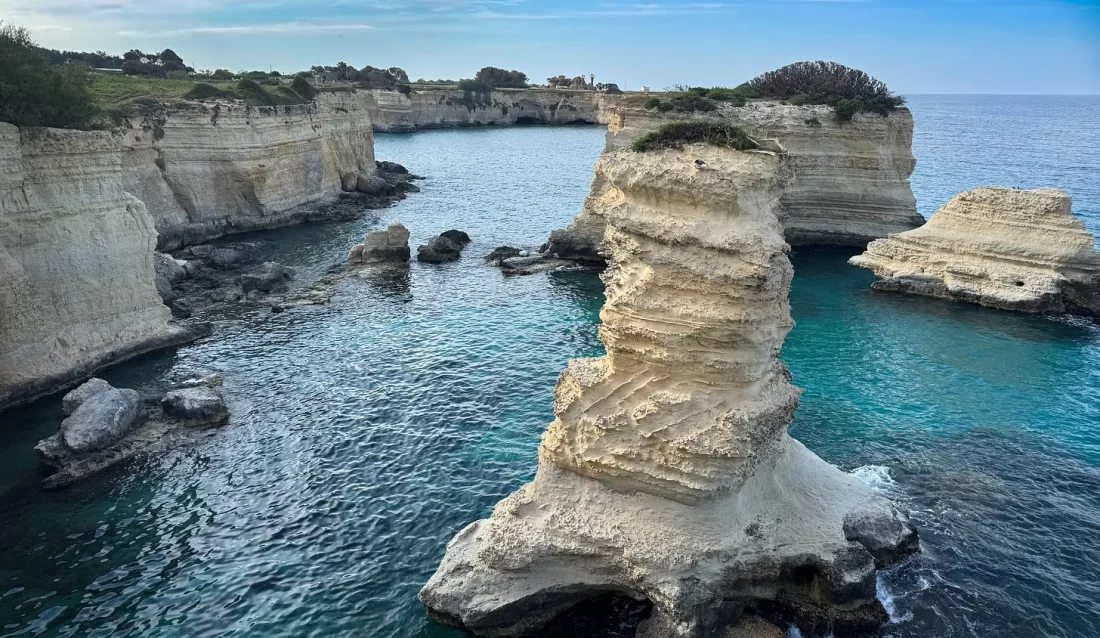
Does Puglia Still Have It?
We took a road trip. Here’s the good, bad, and the downright bizarre.
Most of the people I talk with who love Puglia (more traditionally called Apulia) seem to have gone twenty or more years ago, and it seems that the big reputation stems from that time—not to mention from accounts spanning thousands of years. Decades ago, it must have felt like an undiscovered paradise, exotic, and authentic, with its gorgeous sea and white cliffs. We took a road trip in May, and it was a bit harder to find the exotic, or authentic, although there are still some lovely things to see and do. The New York Times had an article about the first nonstop flights between New York and Bari, the regional capital, which will not improve the overtourism situation.
The Olives Captured our Hearts
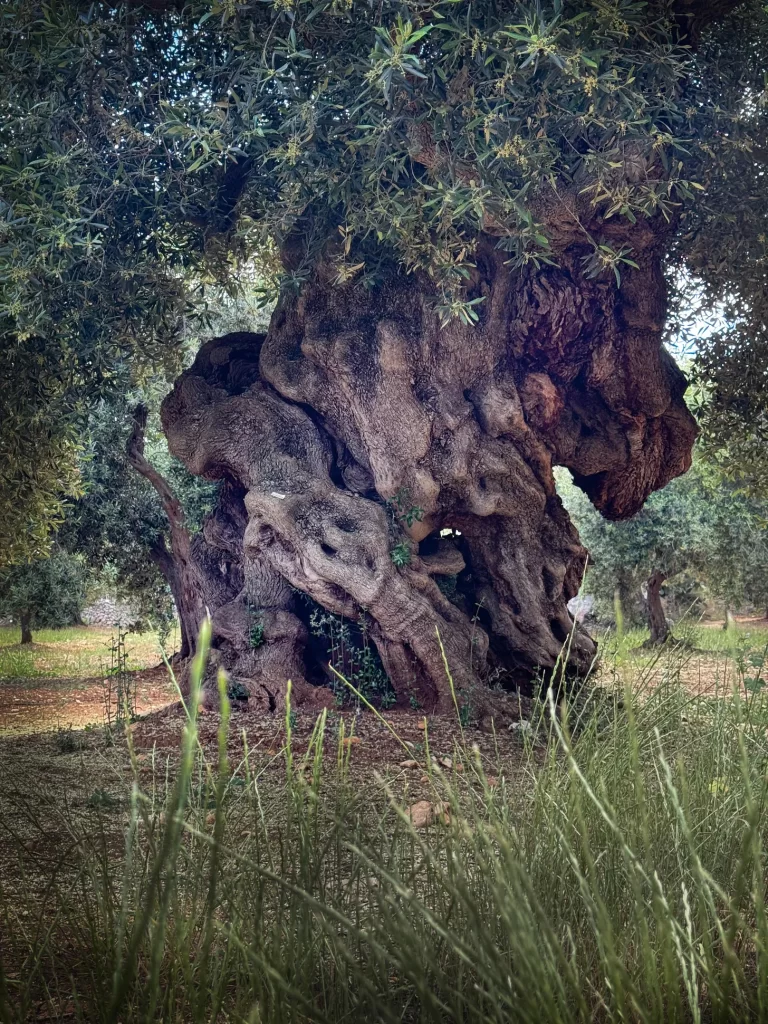
A friend who went to Puglia a few years ago told me that the ancient olives, by themselves, made the trip worthwhile. And I agree. (To add context, they are a local family who also did a road trip. They didn’t come all the way to Italy with Puglia as the sole destination.) The approach to Bari from the north was fascinating. Miles upon miles of olive groves planted as far as the eye can see. Donella, our daughter, flew into Bari and found the scale of the rows of olive trees from the air staggering. As wee-little olive farmers with a mere 100 trees, the amount of time and labor to prune, maintain, and harvest (they use machines) these trees is hard to imagine. Puglia had 60 million olive trees and produced nearly 50% of Italy’s olive oil (15% of the olive oil in the world). The reason for the past tense will become apparent.
When we reached the area around Ostuni, we nearly drove off the road. Monster trees were everywhere, some up to 2,000 years old. Olive trees are filled with character, which only becomes more sculptural as they age. We parked and walked among them, and it felt otherworldly, like we were in a magical forest.
Distressingly, there is tragedy on the horizon. These ancient giants’ days are numbered, and when we went further south, we began to see miles of dead, ghostly trees. Climate change is resulting in warmer winters, which are not cold enough to kill off the traditional pests, like the olive fly, challenging even healthy trees. But these massive fatalities are caused by a deadly bacteria, Xylella fastidiosa, which arrived from Costa Rica on a coffee plant in 2013. It is now working its way across the groves, moving north twelve miles a year, with the fatality of the each tree certain upon every exposure. Puglia has lost 20,000,000 of its trees so far.
The regional government could have stopped this in its tracks in 2013 by cutting down the first infected trees, but the right-wing/populist government instead chose to embrace conspiracy theories and did nothing. Oh, they actually did do something—they arrested the scientists who were trying to find a cure and accused them of spreading the disease themselves. Tragic, and hits way too close to home these days. (These articles from the CBC, and BBC are interesting.)
Ostuni
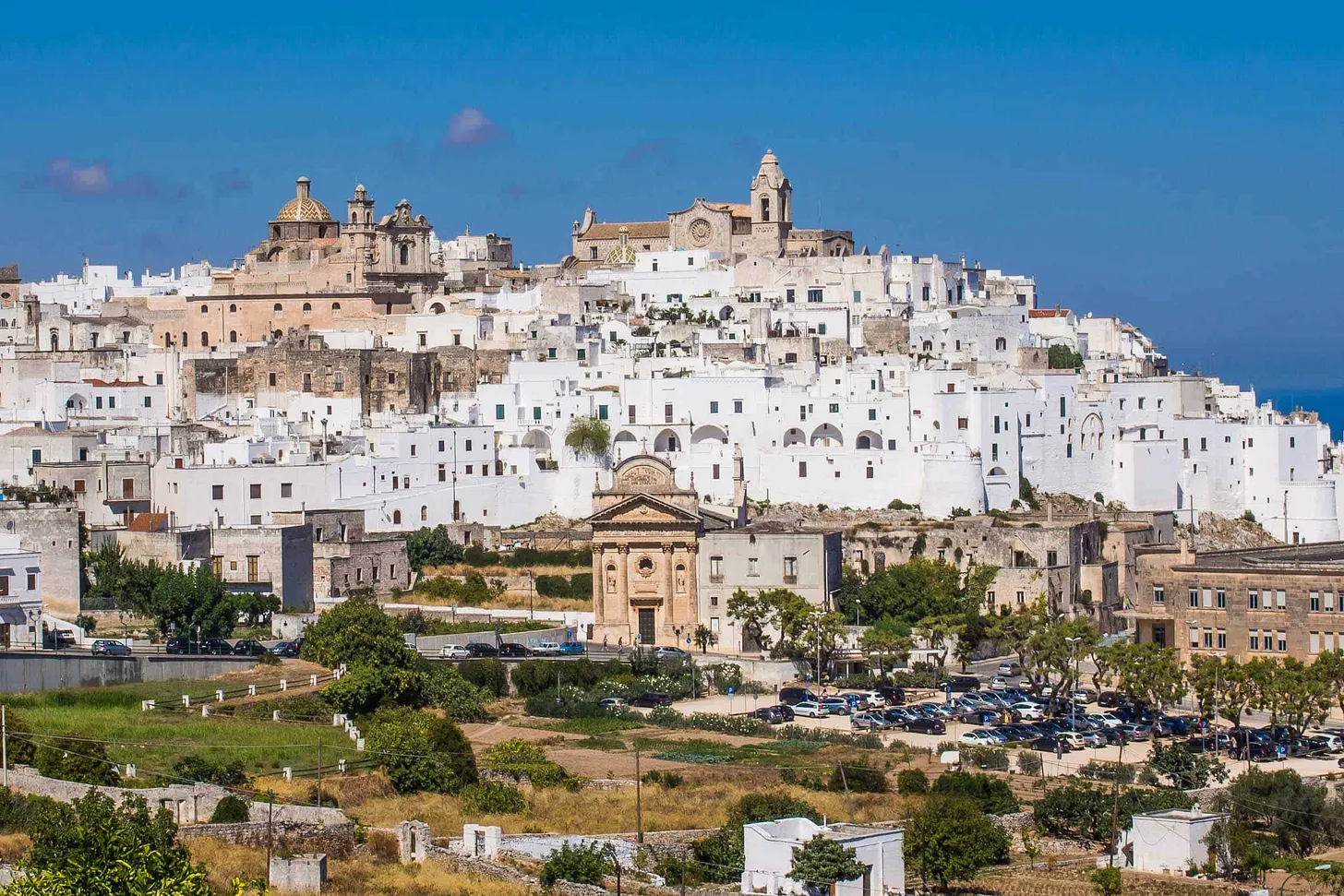
We based ourselves in Ostuni, a village perched on three hills about eight kilometers inland, with a beautiful view of the sea. It’s constructed from white limestone, which means that the streets and buildings are the same lovely, cohesive color. It feels somewhat like Greece. Despite the beauty, it wasn’t ideal as every single store we passed in the historic center sold souvenirs. You can only see so many refrigerator magnets without wanting to lose your will to live. We did find a restaurant that we loved, Casa San Giacomo Ostuni, and returned twice. It nailed the good use of an ancient space, casual elegance, and an interesting menu.
We rented a house in the historic center with some nice architectural details. The owners had redone a series of rooms from the 1500s that spanned four floors and had a large, multi-level roof deck, which was perched right under the dome of the cathedral. Moving around the place was an adventure as it had the steepest stairs I’ve ever seen, and the living room and kitchen were both on the top floor. Marry that with the fact that all the bedrooms were pass-through and contained our late-sleeping 20-something kids, and it made for interesting sneaking around.
Otranto
This Instagram superstar village made Ostuni seem quaint and undiscovered. We could hardly walk down the narrow main street, jammed with crowds of tourists and waiters standing in front of restaurants trying to lure people in.
Otranto was a major trading hub for the Byzantines, connecting Constantinople with Rome for thousands of years. This whole area, but Otranto in particular, had wave after wave of invaders from all over. This current wave of invaders, in the form of tourists, almost made me want to cry on the main street of Otranto, as I’d pushed the family to go there. Suddenly, redemption (and joy) were found in the form of an early medieval mosaic floor in the Otranto Cathedral. The mosaic floor was completed around 1165 by a priest named Pantaleone; unfortunately, not much is known about him.
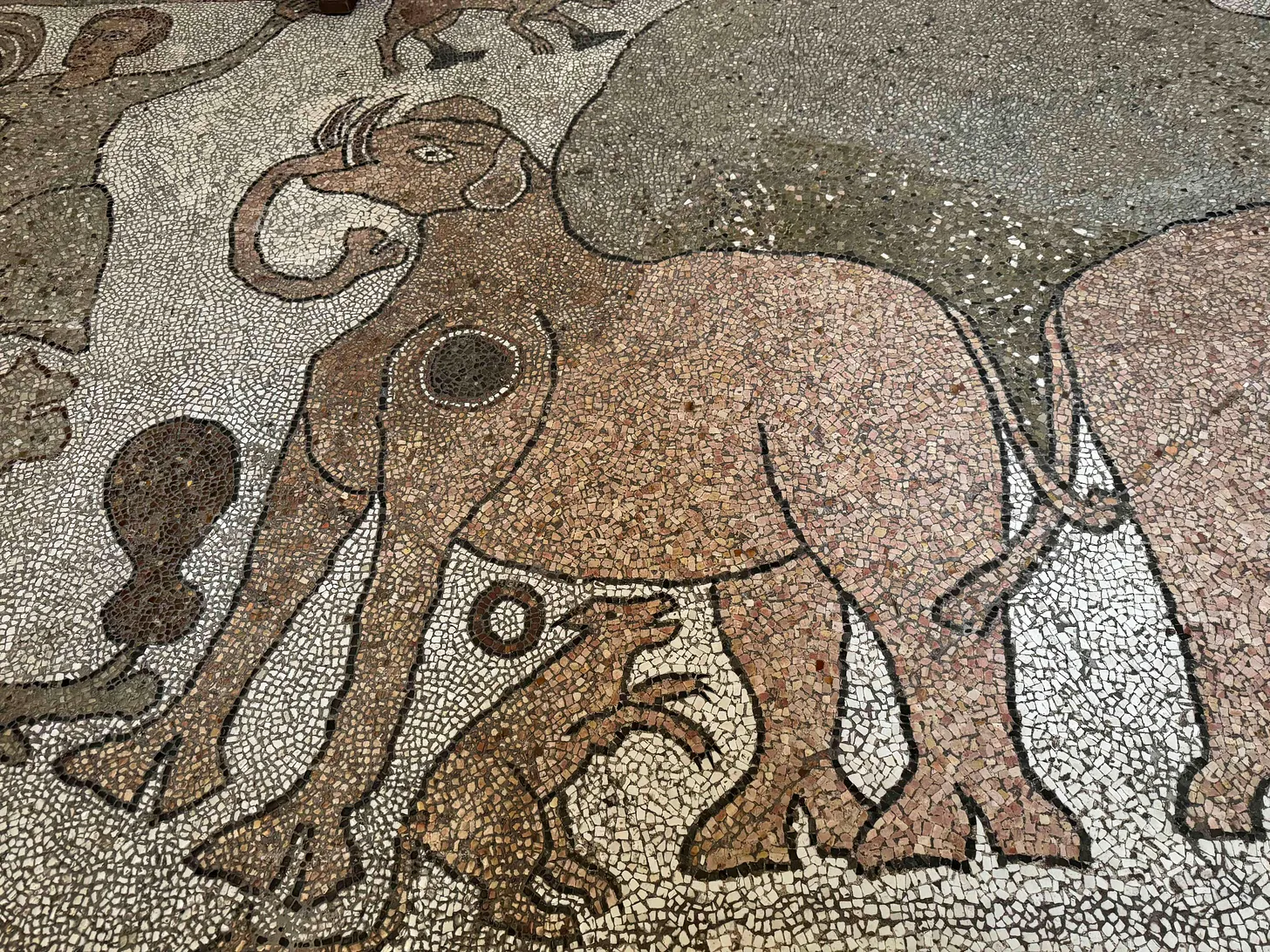
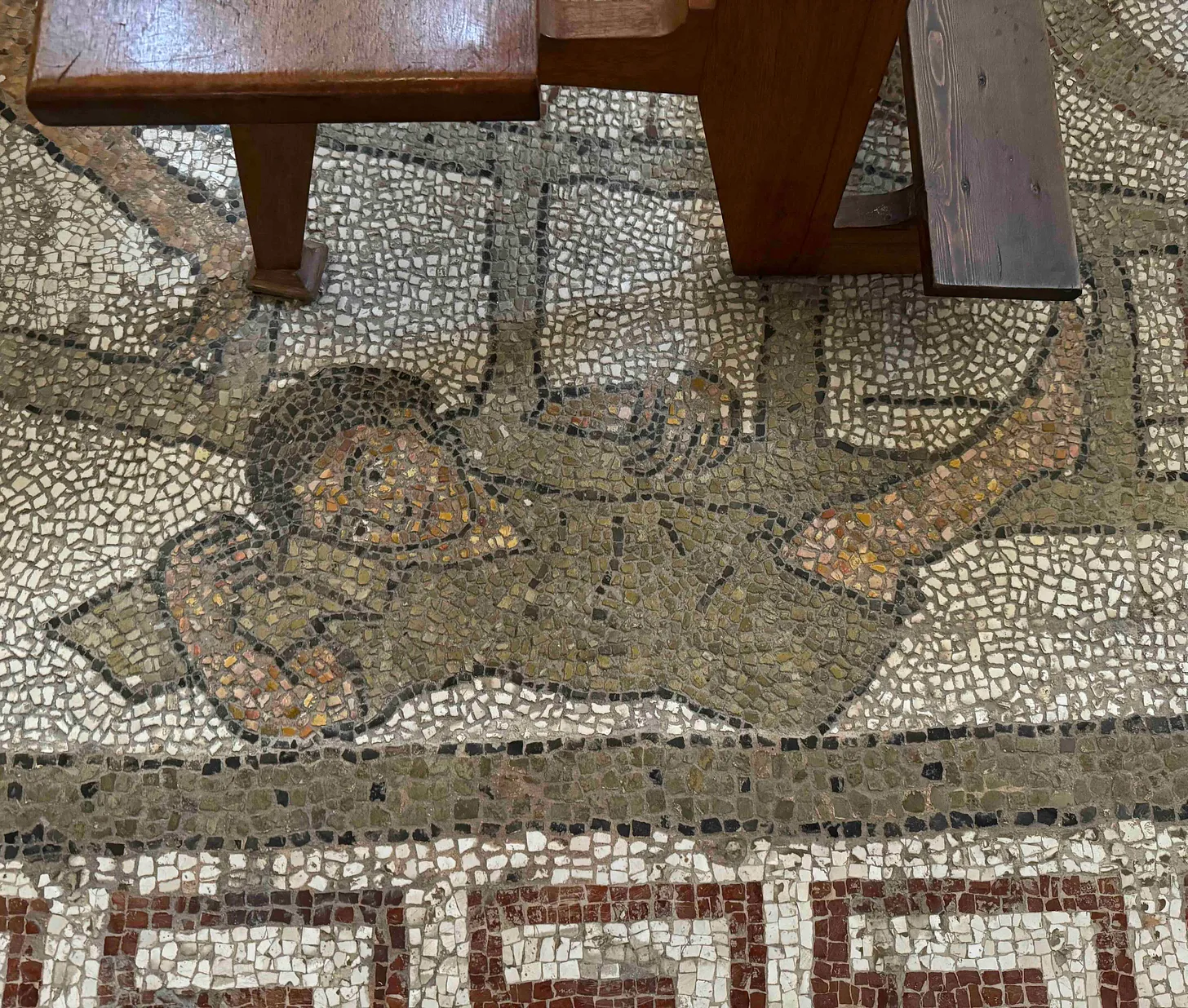
But this elephant. I want to take him home. And this guy proves that working on the floor was difficult.
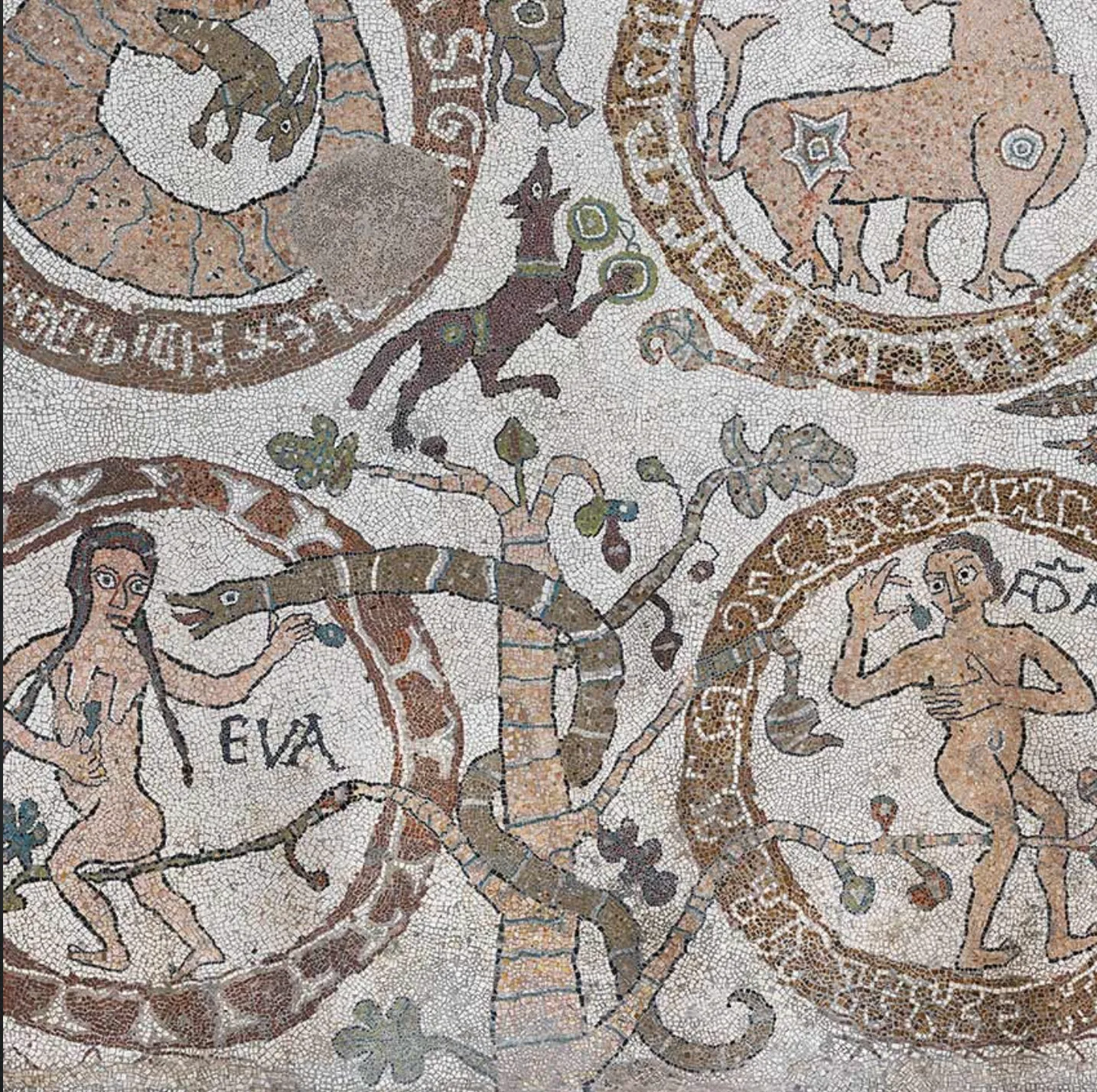
Look at the expressions of Adam and Eve…and is that dog above their heads celebrating the downfall of mankind with cymbals?
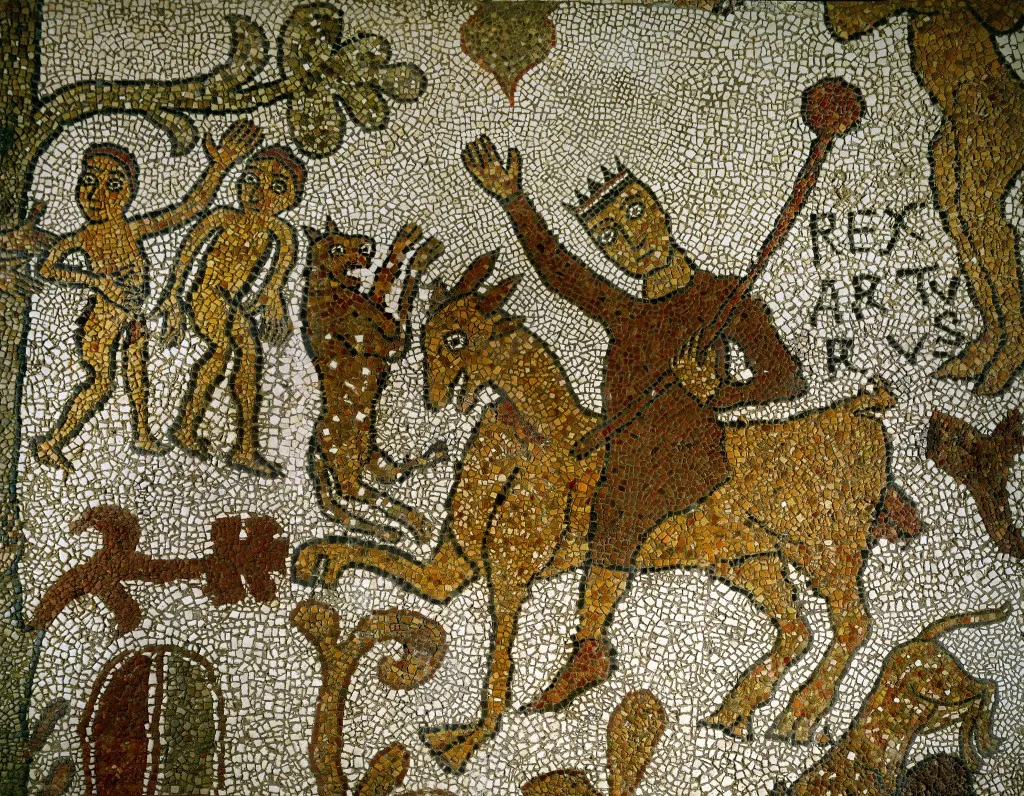
Ok, last one, I promise. Even King Arthur makes an appearance.
Polignano a Mare
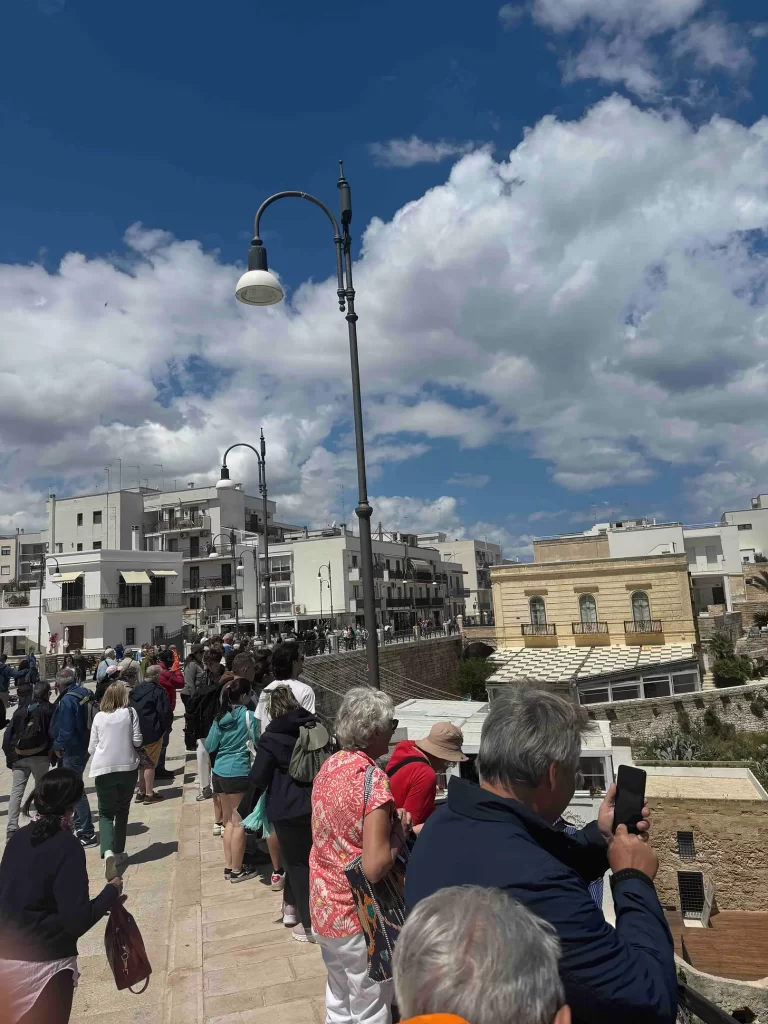
Thumbs down due to crowds and that we didn’t see any businesses or restaurants that weren’t geared toward tourists. There’s a famous outlook over a beach which is best photographed from a bridge.
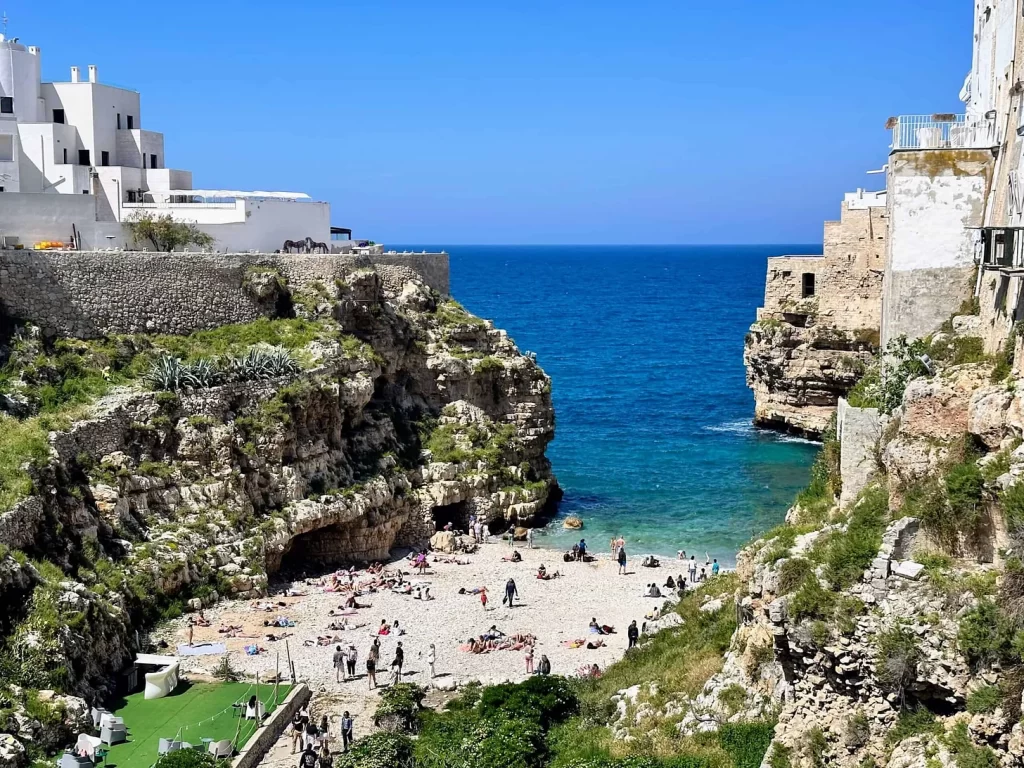
It was amusing how many people were lined up to get this shot.
Lecce and Martina Franca
Thumbs up to both. Lecce is much larger, but both had beautiful Baroque architecture and felt like actual locals lived there as well. If I went back, I’d base myself in one of the two.
And Just When You Think You Know Everything, Along Come Fighting Leopards
The desirability of Puglia is not a new thing. There’s a cave near Ostuni, Grotta di Agnano, that was used for ritual and burial in the Paleolithic and Neolithic periods. The traffic seems to have been pretty constant—the Lapygians, the Greeks, the Romans (the Appian Way from Rome terminated in Brindisi), Byzantines, Lombards, Turks—and, of course, the Normans. Normans?
A Norman knight once told his overlord:
“I am very poor, and in this country (Normandy) I cannot obtain relief; I will therefore go to Apulia where I may live more honorably.” “Who advised you thus?” asked the lord. “My poverty,” replied his vassal.*1
I wish I’d known this bit of history before we did our trip—there are Norman ruins all over Puglia. It turns out that before 1066 (the Norman conquest of Britain) there wasn’t much for a Norman to do with his excess sons in France—after 1066 they could head to Britain to take over things and get rich. In 1027, a guy named Rainulf created a market in Southern Italy for mercenaries, who found a lot of employment with all the people mentioned above bumping into each other and trying to conquer things. When people like Tancred of Hauteville, of Cherbourg, France, had twelve sons, he told eleven of them to bugger off to find their fortune. They went to Southern Italy to make their way as fighting men. They did well. Two of the sons ended up conquering Apulia, Calabria, and Sicily. Within two generations, the family produced Frederick II, who became King of Sicily, Italy, Germany, the Holy Roman Emperor, and King of Jerusalem.
Here’s an interesting passage in H.V. Morton’s wonderful travelogue, Southern Italy, written in 1969, that proves that travel in the 1200s could be even more luxurious than staying at a fancy resort today.
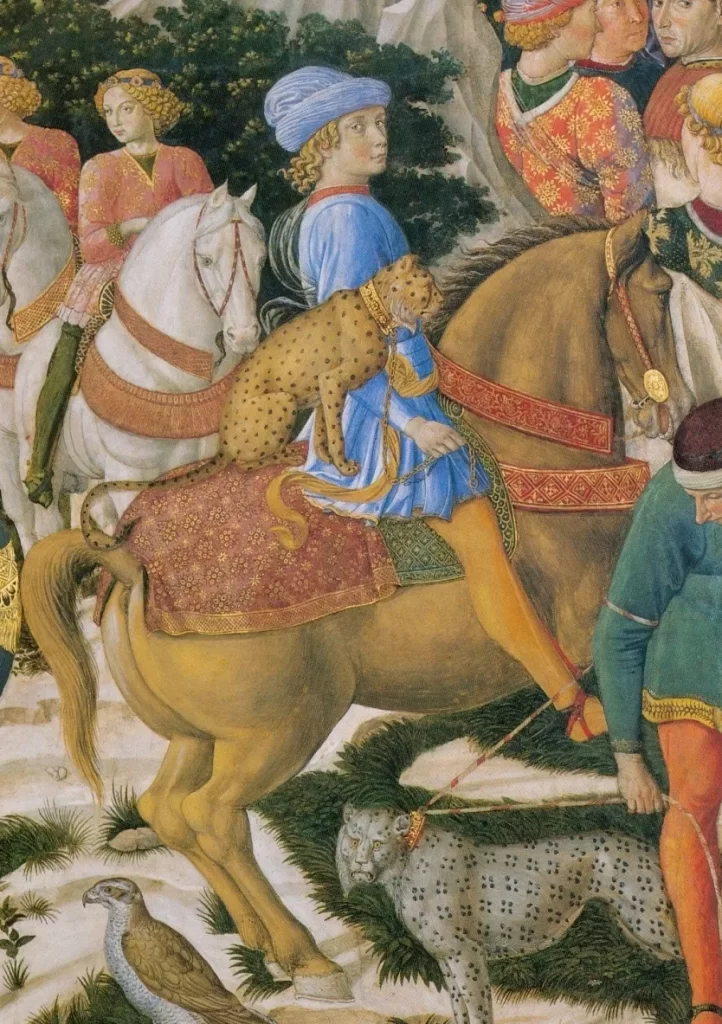
“Frederick II’s passage from castle to castle, from Palermo through the Calabrian mountains into Apulia, must have resembled the progress of Barnum and Bailey. The imperial elephant had been taught to bear the standard of the Hohenstaufen; the imperial treasure was carried upon the backs of camels; the covered litters of the harem were guarded by mounted archers of the Saracen guard; the emperor’s hawks and hounds traveled like princes; so did the hunting leopards, riding on horseback behind their keepers.”
What?!?!? The harems are not unexpected, but hunting leopards riding on horseback? John said, “Is that like putting a laser on a shark?” I found this image from the Medici Chapel, painted by Benozzo Gozzoli in 1459, (250 years after Frederick’s parade) that shows a hunting leopard on a horse because I didn’t want to leave you hanging. (I love the look to easel.)
That’s it for this round. Thanks to you all for reading.


No Comments